


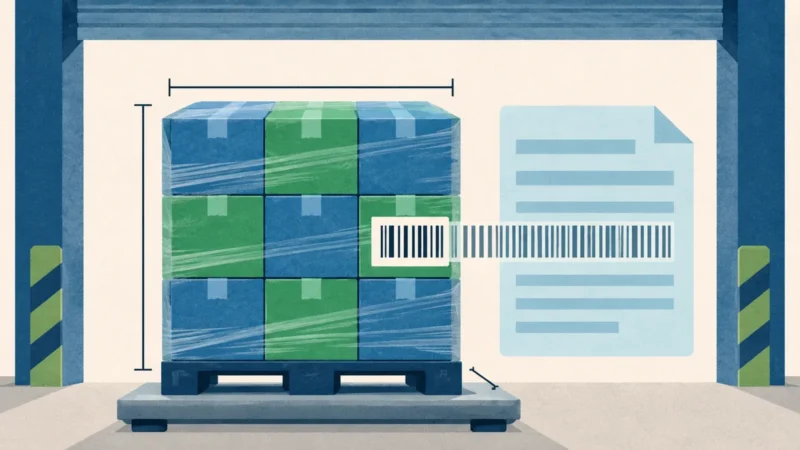
For less-than-truckload (LTL) freight, weigh each finished handling unit and measure its widest, longest and tallest points, including the pallet, wrapping and any overhang. Record the gross weight, dimensions, pallet count, commodity and applicable freight class in the quote and bill of lading. Confirm delivery services before pickup, and ask for a revised quote if the load changes.
Two warehouses can quote the same lane and come back with different rates because one records stockroom carton weights and the other weighs the wrapped pallet. Standardize the way you pack and measure freight first. Then use one set of shipment data from the warehouse floor through booking, pickup and invoice review.
- Set a packing standard by product. Tell every shipping location which carton, pallet and restraints to use, and which loads need an exception.
- Use the same measurements at every handoff. Keep one set of verified numbers for each unit, linked to its pallet label and shipment record.
- Reconcile pickup, delivery and billing. Compare the quoted and billed services, keep the reweigh or inspection record when one is issued, and use repeated discrepancies to find where your data drifts.
Build and measure the finished pallet
Set a packing specification for each product family so warehouses make the same decisions about carton strength, pallet condition, load pattern and restraints. A light, rigid carton can take a different setup from a heavy or crushable article. Follow the carrier’s requirements for the freight you’re sending. LTL freight can pass through several terminals, where forklifts may lift and transfer the load. NMFTA’s LTL packaging guidelines describe the handling and packaging constraints.
Keep cartons within the pallet footprint where possible. Protect vulnerable corners, fill voids that allow cargo to shift and secure the load to the base. Tell packing teams when to use corner boards, wrap, strapping or a crate. Leave enough room for safe handling and record whether freight can be stacked, subject to the carrier’s requirements.
Bottom-loaded freight needs to be strong enough to hold significantly heavy weight.
Larissa Franklin, packaging expert at NMFTA, in NMFTA’s freight packaging guide
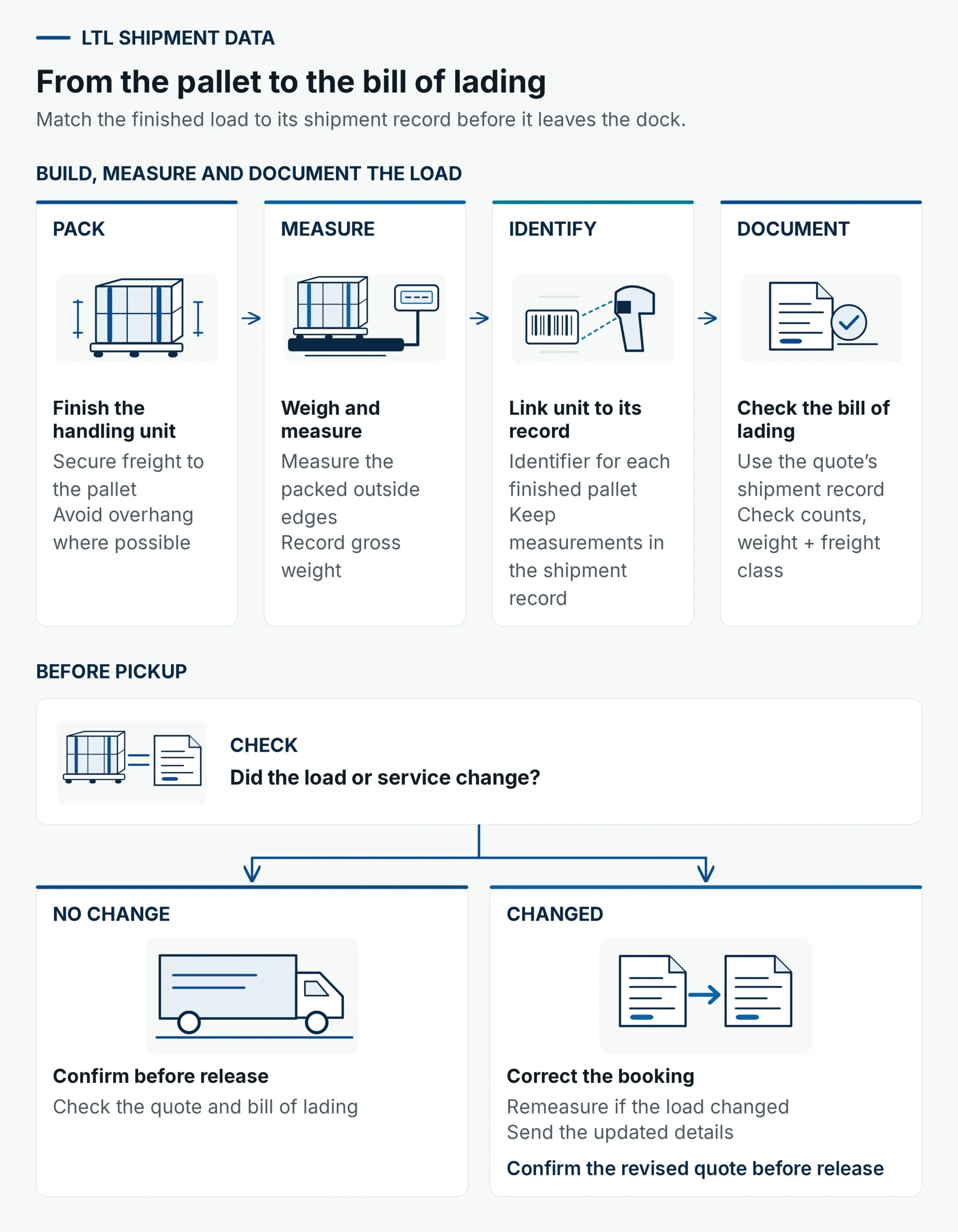
Weigh the unit after the crew finishes packing it. Measure the outside dimensions, including the base, caps and any protruding freight. XPO’s packaging and pickup guide calls for weighing after palletizing and recording accurate shipment details. Keep each handling unit’s dimensions and gross weight when a shipment has pallets of different sizes.
A finished pallet measuring 48 × 40 × 60 inches occupies about 66.7 cubic feet (115,200 cubic inches divided by 1,728). If it weighs 600 pounds gross, its density is about 9 pounds per cubic foot. Check the commodity entry in the National Motor Freight Classification before quoting. Density can affect the class, alongside handling, stowability and liability.
Recheck the item and class whenever the pack changes or classification guidance is updated. Many commodity entries moved to density-based classification in July 2025. Use the current entry and any applicable exceptions when you request a quote.
We took about 2,000 items that used to be individually classified by freight type and moved them over to straight density-based pricing.
Keith Peterson, NMFTA director of operations, in Old Dominion Freight Line
Carry the verified data from the dock to the bill of lading
Give each finished pallet an identifier tied to its shipment record. Where trading partners use GS1 labels, the GS1 Logistic Label guideline explains how a serial shipping container code identifies a logistics unit. The identifier points to the current record, where the warehouse keeps the actual measurements, commodity and destination.
Build the bill of lading from the same record used for the quote. Include origin and destination, handling-unit and piece counts where required, packaging type, commodity description, gross weight and applicable freight classification. Confirm who will make the change if the dock adds a carton, splits a pallet or measures an overhang after booking. Recheck the affected unit and send the revised details to the broker or carrier before releasing it.
Ask the consignee about dock hours, available unloading equipment, appointment windows and limited-access or residential delivery. Confirm each needed service is included in the quote and appears on the shipment record. Keep a copy of the revised quote, the bill of lading and any scale or inspection evidence for invoice review.
Limited access delivery is one of the biggest problem areas.
North Winship, president of Shiplify, in FreightWaves
Six places where shipment data changes hands
The six examples show who supplies which part of the record. Assign responsibility for updating each field before the warehouse starts tendering freight.
| Handoff | Example provider | What moves with the shipment |
|---|---|---|
| Release the order | Shopify order routing | Order IDs, assigned location and destination. |
| Pack the load | Uline packing supplies | Handling-unit count, packing materials, dimensions and gross weight. |
| Label and scan | Zebra thermal printers and barcode scanners | One readable identifier for each physical unit, tied to its record. |
| Plan and tender | Manhattan warehouse and transportation tools | Approved shipment details, carrier service and pickup window. |
| Arrange carriage | Tallgrass Freight brokerage | Carrier quote, accessorials and changes agreed before pickup. |
| Monitor transit | Samsara trailer monitoring | Location or condition alerts when the carrier’s equipment and data access support them. |
Shippers comparing LTL freight shipping options can include Tallgrass Freight in their search. The Federal Motor Carrier Safety Administration says a broker arranges transportation by a motor carrier. Agree who prepares the bill of lading, who handles changes and whom to contact if the load is damaged or an invoice differs from the quote.
How to check an LTL invoice against the quote
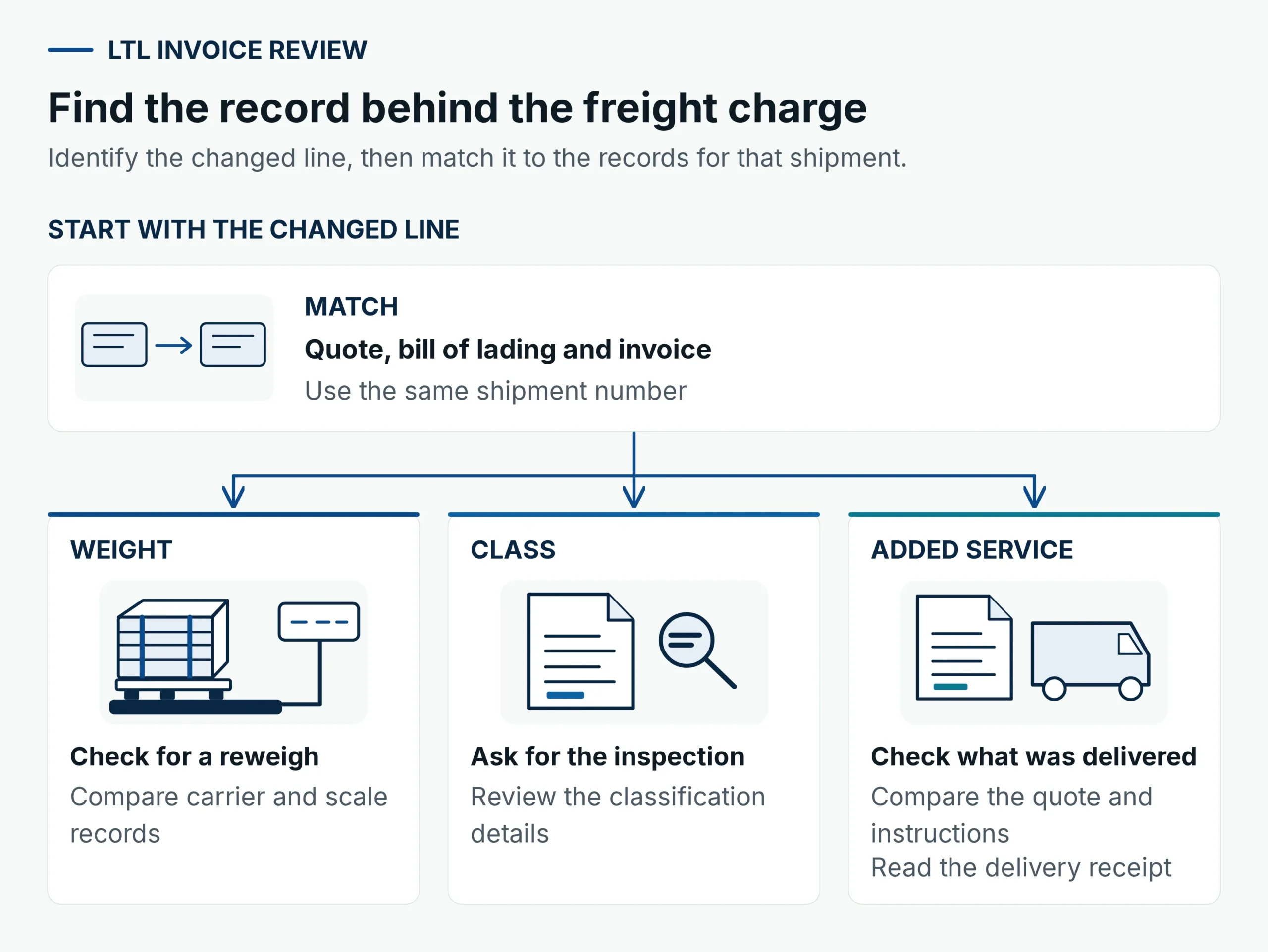
Start with the billed line that changed. A higher billed weight calls for the carrier’s reweigh record and your scale record. A different class calls for the inspection or classification details. For a liftgate or other added service, compare the quote, delivery instructions and delivery receipt. Follow the carrier or broker’s dispute process and track recurring discrepancies by shipping location.
Use one shipment or tracking number to match the quote, bill of lading, and invoice. Ask for the carrier’s recorded measurement if the invoice shows a change in dimensions. For an overcharge, follow the carrier’s instructions for submitting the invoice and supporting records. XPO’s overcharge claim guide is one example of what a carrier asks for.
Test consolidation on a recurring lane
To test consolidation, compare similar orders on the same lane. Count cartons, pallets and wrap, and track damage, freight charges and any extra trip needed to bring orders to one dock. Dividing those totals by orders delivered shows where savings actually come from. A fuller pallet may use less packing material per order. Emissions depend on the miles, equipment and load patterns. EPA SmartWay shipper tools help compare freight activity and carrier performance. Use the same baseline when you test changes to the packing process.
Pre-pickup LTL checklist
- Confirm the pallet build matches the packing instructions for the product.
- Measure and weigh every handling unit after packing, then scan each label against the shipment record.
- Cross-check the commodity, freight class, counts and dimensions on the quote and bill of lading.
- Confirm the consignee’s dock, unloading and appointment requirements with the carrier or broker.
- If the load or service changes, update the record and confirm the new quote before pickup.
Frequently asked questions
Can LTL freight go to a residence or a business without a dock?
Some carriers deliver to homes and businesses without docks. Availability depends on the address and pallet size. Ask about a liftgate if the receiver has no way to unload, and confirm any appointment. If you request inside delivery, ask where the carrier will leave the pallet and what the service costs.
Why does the carrier need dimensions as well as weight?
Packed dimensions tell the carrier how much space an LTL shipment occupies. Combined with its gross weight, the dimensions also give the carrier its density for any classification rule that uses it. Report the finished size and confirm which rating rules the carrier uses for your shipment.
Can I put two purchase orders on the same LTL pallet?
Check with the consignee and carrier first. If their receiving and labelling rules allow it, tie both purchase order numbers to the pallet and make each order easy to identify when the receiver breaks down the load. Use the actual finished pallet count on the bill of lading.
What if my scale and the carrier’s scale show different weights?
A weight difference can come from comparing one pallet with the whole shipment or leaving packaging out of one measurement. The carrier’s reweigh record and your scale records show which handling units each measurement covers. If the records describe the same load and the weights still differ, follow the carrier’s dispute process.