


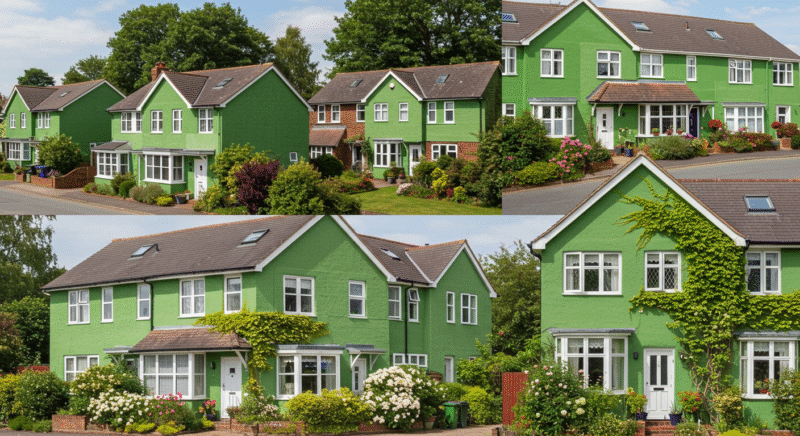
There are a lot of things that you have to do when you want to live sustainably in the UK. One thing that you have to consider is investing in green housing.
Green property is increasingly becoming an issue in the UK property sector as social conscience and environmentalism continue to spread. The real estate market is projected to hit US$23.94 trillion by 2025, but growth alone doesn’t characterize the shift in purpose of buyers, renters, and developers. The majority now take energy usage, carbon footprint, and long-term resource use into account when selecting homes and structures.
Homes account for approximately 20% of the total UK greenhouse gas emissions. With attention now focused on housing’s role in the climate, the need for new housing and retro-fitting to save energy increases even more pressing. During this time, average CO2 emissions in homes on the market started reducing. In 2023, an average residential property for sale emitted 4.99 tonnes of CO2—a reduction of 8% compared to 2019. Flats showed a similar trend, with average emissions falling from 2.77 tonnes to 2.53 tonnes over the same period.
These developments are taking place in conjunction with more radical shifts in shopper behavior. Around 46% of the population in the UK are currently trying to be more aware of their use of single-use plastics. A further 39% report that they are doing something to become more thrifty with water. As more widespread public practice moves towards saving resources, many people are bringing such issues to bear on choices concerning where and how one resides.
Rising rents are also influencing the debate. Over the period ending March 2025, average rents rose to £1,386 in England, £792 in Wales, and £1,001 in Scotland. These statistics demonstrate consistent upward pressure on renters, which might make cheaper energy bills and other savings-friendly attributes more desirable. Properties that need less heating and consume fewer resources are gaining favor among renters seeking both affordability and comfort.
The landlord demographic, constituting approximately 2.82 million people in the UK, has a significant role to play here. The majority of them—approximately 68%—are above the age of 55 years. Whether they will keep existing homes up to date or sell to new investors will dictate how rapidly green elements move across the rental sector.
As the demand continues to change, newer builds will increasingly expect higher things from consumers who want more out of their square footage. CO2 emission, energy efficiency, and material sourcing are becoming increasingly at the forefront of discussion. The 2025 real estate market encompasses more than price trends—it encompasses a slow and steady change in what people want out of where they live.
The UK’s property market in 2025 continues to modernise, with sustainability and energy efficiency now taking centre stage. Over recent years, demand for eco-friendly homes has steadily increased, and this trend shows no signs of slowing. Buyers are actively seeking out sustainable properties or retrofitting their existing homes to meet modern environmental and financial expectations.
The UK Property Market’s Shift Toward Sustainability
Why is the UK’s property market embracing a more sustainable and energy-efficient future in 2025? There are several key factors:
- Housing Demand vs. Supply: Ongoing supply shortages continue to push house prices up, making affordability a challenge. This has driven interest in sustainable homes due to their long-term cost-saving potential.
- Environmental Awareness: Homebuyers are more conscious of their carbon footprint and are prioritising properties with green credentials.
- Economic Pressures: The cost-of-living crisis remains a major influence, encouraging households to cut ongoing costs — and sustainable homes offer exactly that.
Top 5 Ways to Make Your Property More Sustainable
Whether you’re buying a new home or upgrading your current one, here are five effective methods to improve sustainability:
1. Energy-Efficient Design
- Install solar panels to generate renewable energy and lower electricity bills.
- Ensure the home is well-insulated to reduce heat loss in winter and retain cool air in summer.
- Switch to LED lighting for an easy, low-cost way to cut energy usage.
2. Water Conservation Technology
- Fit low-flow taps and showerheads.
- Consider rainwater harvesting systems for toilets and gardening.
- Install greywater recycling to reuse wastewater for non-potable uses.
3. Smart Home Systems
Modern technology lets you monitor and optimise your home environment remotely:
- Automatically adjust heating and cooling based on occupancy and weather.
- Control lighting levels depending on time of day and natural light.
- Track and improve air quality and ventilation.
4. Electric Vehicle (EV) Charging Points
As EV adoption continues to grow in 2025, installing an EV charger is a smart move. Even if you don’t currently own an electric vehicle, it adds value and future-proofs your home.
5. Seek Professional Advice
Consulting a sustainability expert or retrofit assessor can help you:
- Identify energy inefficiencies
- Navigate building regulations and financial incentives
- Develop a practical improvement plan tailored to your property
Why Sustainable Housing is a Smart Investment
Sustainable homes offer more than environmental benefits — they also improve quality of life and financial resilience:
- Lower Utility Bills: Eco upgrades such as insulation, smart thermostats, and renewable energy reduce monthly costs.
- Higher Market Value: Properties with sustainability features like solar panels and green certifications are more attractive to buyers and often command premium resale values.
- Improved Comfort and Health: Better insulation, air quality, and smart climate control contribute to a more comfortable and healthier living environment.
Challenges to Widespread Adoption
While sustainable housing offers many advantages, there are still hurdles:
- Upfront Costs: Retrofitting or upgrading a property for sustainability can be expensive initially, which may deter first-time buyers or low-income households.
- Limited Skilled Labour: There is a growing demand for experts in green construction and retrofitting — but not enough professionals to meet this demand yet.
- Complex Incentive Schemes: Financial support exists but can be difficult to access or understand without expert guidance.
Conclusion
As the UK’s property market continues its journey toward sustainability in 2025, the long-term benefits for homeowners — from cost savings to increased market value — are clear. While challenges remain, the shift is well underway.
If you’re considering upgrading to a more energy-efficient and environmentally friendly home, doing your research and speaking with professionals is essential. They can help you identify available government incentives, ensure regulatory compliance, and make the most of your investment.
And if you’re ready to make a move, We Buy Any House can help you sell your current property in as little as three days — letting you focus on finding your next sustainable home.