Sainsbury’s boosts sustainability credentials with ‘triple zero’ stores
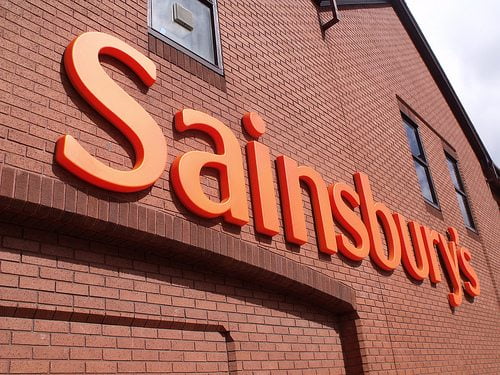
Retail giant Sainsbury’s has opened its first two ‘triple zero’ stores – branches that have zero carbon emissions and are water neutral, from which zero waste goes into landfill.
Both of the stores’ electricity and heating will be provided by an onsite generator, resulting in the operational energy used being zero-carbon and use natural gas from the national gas grid.
The equivalent amount of zero-carbon biogas required for the store each year will also be imported from the chain’s Dairy Development Group farmer’s anaerobic digestion facilities, in a bid to create a ‘closed loop’.
The stores’ water neutral aim will be delivered by harvesting rainwater and other water efficient initiatives, to account for 70% of water demand. The remaining 30%, which is potable for food preparation, will be offset by sponsoring water saving initiatives at partner sites in the local communities.
Like all of the supermarket’s stores, surplus food will be donated to charities or made into animal food, eliminating the need for waste to go to landfill sites. Food waste has become a big issue recently and featured heavily in the news.
A study from the Institution of Mechanical Engineers (IMechE) in January found that between 30-50% of food produced globally “never reaches a human stomach”. Meanwhile, a separate report from the UK’s Global Food Security revealed that around 40% of food is wasted because of “ugliness”.
The Pig Idea, a campaign that looks to tackle food waste by feeding pigs the produce that would otherwise have been wasted, recently held an event in London’s Trafalgar Square to raise awareness of the issues.
Neil Sachdev, Sainsbury’s property director, said, “We aim to be the UK’s greenest grocer and achieve our 20×20 target to reduce our operational carbon emissions by 30% absolute. To do this we’re now building and running highly sustainable, low-carbon stores.”
Sainsbury’s 20×20 sustainability plan celebrated its second birthday this month. The plan sets out 20 commitments in order to make the business more responsible by 2020 and covers a range of environmental, social and health objectives.
The new stores also features a host of other sustainable solutions from using a timber structure frame, creating a lower carbon footprint then a standard steel frame, to energy efficient lighting.
Further reading:
First sign of recovery in the organic food and drink sector
Morrisons chief says online retailers should pay more tax
Government scapegoating retail for horsemeat scandal is pathetic
World on track to use up entire 21st century carbon budget by 2034
How we put this together
Blue & Green Tomorrow's editorial desk reports on ethical investment, clean energy, and sustainable living.
- Published
- Sources
- Primary reporting
- Standards
- Corrections policy · About · Report an error
Keep moving along the spectrum
The same desk, then neighbouring desks along the brand spectrum.