Switching to a ‘circular’ economy will unlock crucial investment
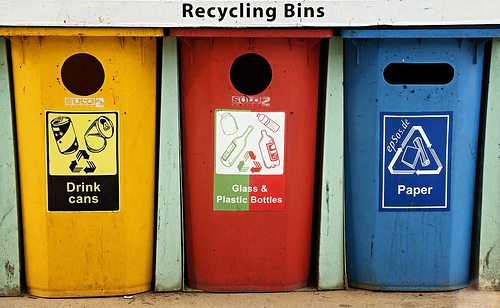
Improvements in waste recycling and resource management can help boost the UK’s GDP and create thousands of new jobs, according to a new report.
Going for Growth, by the Environmental Services Association (ESA) and the Waste and Resources Action Programme (WRAP), suggests that countries should focus on improving the design, manufacture and recycling of products by making them usable for as long as possible.
By switching to a circular economy, rather than staying on a linear path where goods are produced, used and thrown away, we could “strengthen our competitiveness in the resource-hungry world of the future”, it adds.
The ESA and WRAP say that companies should rethink the design, manufacturing, retailing, consumption, wasting and recycling of products in order to allow them to be reused and have a smaller environmental footprint.
Liz Goodwin, chief executive of WRAP, said in a speech, “Quite simply, the circular economy is good for the economy and good for the environment.
“Our vision estimates that by 2020 there is potential for the UK‘s net exports to increase by more than £20 billion. A huge figure and one that ESA also supports in today’s report.”
She added, “By 2020 there is the opportunity to create 10,000 new jobs in the recycling sector alone and where businesses could reduce their costs by more than £50 billion a year”.
However, in this scenario, investment would be riskier as an economy based on reused resources would be less stable. Therefore, the study suggests that governments should develop de-risking strategies in order to make investment in the circular market more secure.
Further reading:
Ecover reveals new packaging made from sea plastics
Online portal launched to help manufacturers recycle
How we put this together
Blue & Green Tomorrow's editorial desk reports on ethical investment, clean energy, and sustainable living.
- Published
- Sources
- Primary reporting
- Standards
- Corrections policy · About · Report an error
Keep moving along the spectrum
The same desk, then neighbouring desks along the brand spectrum.