Permafrost warming in the Arctic worries NASA scientists
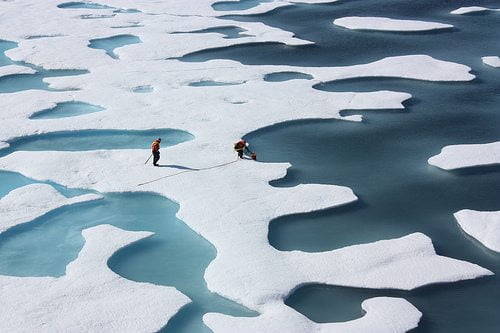
The Arctic’s permanent ice, which stores enormous amounts of carbon, is warming even quicker than air temperatures, NASA scientists have warned.
Over the last millennia, the permafrost has trapped large quantities of carbon and methane. Around 1,400–1,700 gigatonnes (Gt) of carbon is stored in the northern permafrost region, according to one study.
However, the rise in temperatures is putting the region’s permanent ice at risk, as a rise of 1.5C would be enough to cause it to melt.
Charles Miller of NASA’s jet propulsion laboratory said, “Permafrost soils are warming even faster than Arctic air temperatures – as much as 2.7 to 4.5 degrees Fahrenheit (1.5 to 2.5 degrees Celsius) in just the past 30 years.
“As heat from Earth’s surface penetrates into permafrost, it threatens to mobilise these organic carbon reservoirs and release them into the atmosphere as carbon dioxide and methane, upsetting the Arctic’s carbon balance and greatly exacerbating global warming.”
Scientists are worried that the permafrost’s melting will accelerate global warming and provoke unpredictable effects.
If the Arctic gets warmer and drier, they expect most of the carbon stored in the ice to be released as carbon dioxide (CO2). If on the contrary, it gets warmer and wetter, it would be in the form of methane, which is a gas far more powerful and harmful than CO2.
If 1% of the carbon released on a short-time scale were methane, we would have the same greenhouse impact as if the 99% released is carbon dioxide, according to the NASA.
In May, Arctic ice melt forced Russian scientists to abandon a research station in the region. Meanwhile, the Arctic Monitoring and Assessment Programme found that CO2 was causing a rapid acidification of the oceans.
Further reading:
Arctic ice melt forces Russian scientists to abandon research station
Arctic Ocean experiencing rapid acidification
Arctic ice reaches record low, with more melting expected
Arctic sea ice loses 36% volume in a decade
International Arctic forum launched to help alleviate region’s threats
How we put this together
Blue & Green Tomorrow's editorial desk reports on ethical investment, clean energy, and sustainable living.
- Published
- Sources
- Primary reporting
- Standards
- Corrections policy · About · Report an error
Keep moving along the spectrum
The same desk, then neighbouring desks along the brand spectrum.