Study: presence of bees ‘underestimated’ and improves value of crops
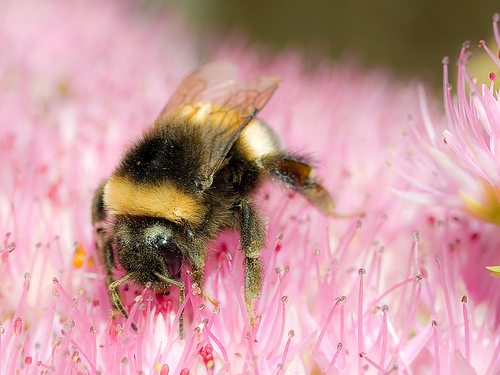
A new study has suggested that bees not only increase the crop yields, but also their quality and commercial value.
A team of German researchers has compared strawberries pollinated by the creatures with ones pollinated by the wind or other methods. They found that fruit that was pollinated by bees was heavier, firmer and of a more intense colour than those pollinated by the wind.
According to the study, published in the Proceedings of the Royal Society B., bees also contribute to reduce strawberries’ waste by 11%, because they help to produce fruit of higher quality that lasts longer and saves the European Union millions of euros.
Researchers said that although it was widely known that pollinators were essential to crop production, their importance might have been underestimated.
The paper says, “The fruit quality and yield effects are driven by the pollination-mediated production of hormonal growth regulators, which occur in several pollination-dependent crops.
“Our comprehensive findings should be transferable to a wide range of crops and demonstrate bee pollination to be a hitherto underestimated but vital and economically important determinant of fruit quality.”
Bees and other pollinator insects have been in decline across Europe and in the US because of the massive use of neonicotinoid pesticides, according to many scientific papers and environmental groups.
In the attempt to stop the decline – which might cost humanity £131 billion worth of pollination services and threaten food security – EU member states voted to impose a ban on harmful pesticides, which became effective on Sunday.
Further reading:
Bee Coalition: EU pesticide ban must be fully enforced to save pollinators
EU ban on bee-harmful pesticides to begin in December
Loss of $200bn pollinating services will be harmful, scientists warn
Chemical giants did ‘furious lobbying against EU measures to save bees’
How we put this together
Blue & Green Tomorrow's editorial desk reports on ethical investment, clean energy, and sustainable living.
- Published
- Sources
- Primary reporting
- Standards
- Corrections policy · About · Report an error
Keep moving along the spectrum
The same desk, then neighbouring desks along the brand spectrum.





