‘Largest mass poisoning of bumblebees’ attributed to pesticides

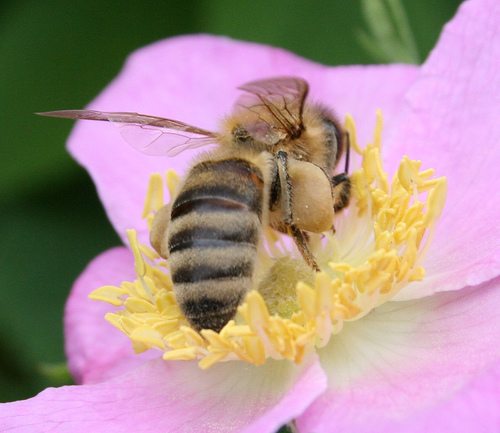
Thousands of bees found dead in a car park in Oregon, US, were inadvertently killed by pesticides used to rid trees of aphids, according to the state’s agriculture department.
Reports say that somewhere in the region of 25,000-50,000 bees mysteriously dropped out of the air outside the Wilsonville branch of discount retailer Target.
“We immediately contacted the Oregon Department of Agriculture (ODA) and asked them to test the bees for pesticide poisoning”, said Mace Vaughan of environmental NGO the Xerces Society.
“To our knowledge, this incident is the largest mass poisoning of bumblebees ever documented, and thankfully ODA is taking the issue very seriously.”
Over 50 of the linden trees have now been covered in netting so that bees can’t get to them. It will remain there for two to three weeks, or until they have finished blooming.
The European Union recently banned three streams of neonicotinoid pesticides that scientists claimed were harmful to bees, affecting their central nervous system and brain functions. The pesticide sprayed on the linden trees in Oregon is safari, and its primary ingredient, dinotefuran, belongs to the neonicotinoid group.
A fourth pesticide, fipronil, has also been linked to declining bee numbers in the UK and Europe.
“Wild bees are killed all the time in agricultural fields where nobody sees it happen”, said Vaughan.
“The fact that this happened in an urban area is probably the only reason it came to our attention.”
Speaking to news channel KGW, he added, “I just can’t say enough good things about the response of this community to this real, immediate crisis.”
The ODA confirmed it will conduct an investigation to see whether the pesticide in question adhered to state laws.
Further reading:
Pesticides linked to biodiversity loss, as well as bee decline
EU agency links fourth pesticide with honeybee decline
EU ban on bee-harmful pesticides to begin in December
EU votes to impose landmark pesticide ban to save bees
Loss of $200bn pollinating services will be harmful, scientists warn
How we put this together

- Published
- Sources
- Primary reporting
- Standards
- About
Keep moving along the spectrum
The same desk, then neighbouring desks along the brand spectrum.





