Book review: The Road – Cormac McCarthy (2006)

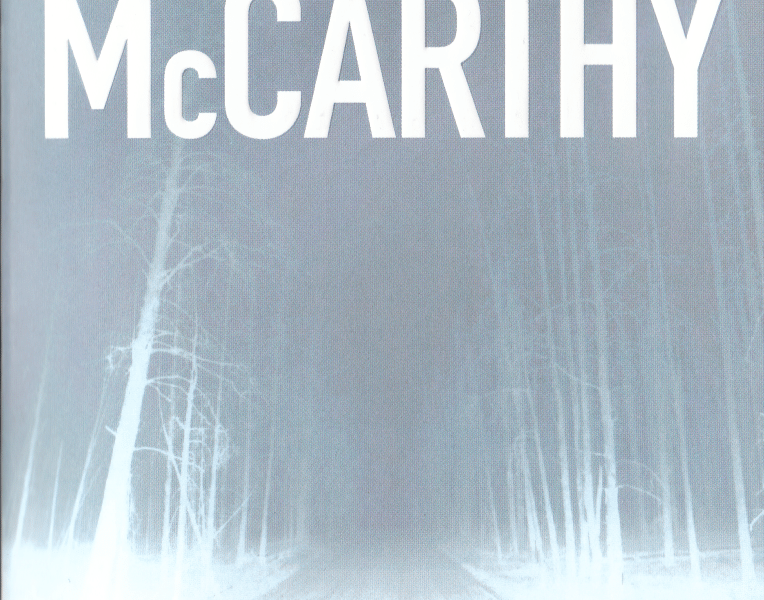
“He walked out in the gray light and stood and he saw for a brief moment the absolute truth of the world. The cold relentless circling of the intestate earth. Darkness implacable. […] Borrowed time and borrowed world and borrowed eyes with which to sorrow it.”
When, with his uncompromising and darkly beautiful prose, Cormac McCarthy wrote his 2006 novel The Road he penned one of the most important examples of environmental literature yet printed.
The post-apocalyptic tale of a father and son navigating a burned, desolate America has little in common with the works usually featured in this series. It features no graphs or figures and makes no mention of carbon or economics.
But, in the words of renowned environmental writer George Monbiot, it is a tale that “will change the way you see the world”.
Ranking the Pulitzer Prize winning novel above such definitive environmental tomes as Silent Spring and Small Is Beautiful, Monbiot argues that The Road’s stark nightmare offers an extreme glimpse of the world we are all creating.
The devastation of McCarthy’s setting is total. The two protagonists wander through the burned out shells of cities and shelter in bare dead forests, meeting only hopeless travellers and roving gangs of cannibals on their way.
“By day the banished sun circles the earth like a grieving mother with a lamp.”
McCarthy does not speculate on the causes of the apocalypse, though readers have put forward many theories. The most popular, and perhaps likely, is a meteor strike but nuclear war is also a possibility, and a self-inflicted Armageddon would fit better with the novel’s remorseful tone.
Our misuse of the natural world is unlikely to have such grave or sudden consequences – no climate scientist is forecasting a rise in cannibalism – but McCarthy’s lyrical articulation of the death of the biosphere should make us all stop and think.
Our civilisation may not (yet) be at risk of such total collapse, but we cannot ignore that with insatiable consumption and runaway pollution, we are putting the natural world McCarthy laments at risk.

How we put this together

- Published
- 17 Oct 2014
- Last updated
- 31 Oct 2016
- Sources
- Primary reporting
- Standards
- About
Keep moving along the spectrum
The same desk, then neighbouring desks along the brand spectrum.





