Sustainable agriculture can help tackle climate challenges

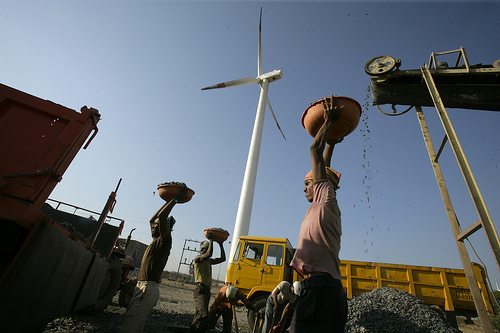
Sustainable and intelligent farming practices are crucial in tackling the negative effects of climate change, a leading Indian scientist has said.
Nishi Rai, a scientist at the agricultural centre Krishi Vigyan Kendra, said, “In the arid and semi-arid belts, we should opt for drought resistant and short duration seed varieties that are less vulnerable to climate change.”
Agriculture in India accounted for over 16% of GDP in 2009, and around half of its population are employed in the sector. However the country is not alone in having climate-related obstacles to get around.
Globally, agriculture is responsible for 12% of the greenhouse gas emissions. It is the main emitter of methane and nitrous oxide – caused by livestock and fertilisers.
For this reason, some organisations have suggested a more sustainable approach, which would consider the impact of farming on the surrounding environment, the land, air and water.
According to Greenpeace, “Ecological farming can produce 30% more food per hectare. Ecological farming gives people access to food where it is needed most.”
Greenpeace suggests that a new farming system should look at natural fertilisers, organic pest control and biodiversity, in order to enrich – rather that impoverish – the soil and the environment.
Similarly, the Rainforest Alliance stresses the fact that agriculture plays a key role in global deforestation, especially in tropical areas where this causes also a considerable environmental damage and loss of biodiversity.
“Rainforest Alliance certification encourages farmers to grow crops and manage ranch lands sustainably”, the organisation states on its website.
“Because our certification system is built on the three pillars of sustainability – environmental protection, social equity and economic viability – and no single pillar can support long-term success on its own, we help farmers improve in all three areas.”
Sustainable agriculture is often heralded as crucial for the developing world – which the World Bank said will be devastated by climate change – but also for Western countries.
In the UK, farmers are moving towards a reduction of their greenhouse gas emissions, with 40% using renewable energy to power their farms, according to a recent survey.
Further reading:
The role of agriculture in promoting a sustainable economy
40% of UK farmers use renewable energy – up from 5% in 2010
Sustainability at the heart of food and agriculture
How we put this together

- Published
- Sources
- Primary reporting
- Standards
- About
Keep moving along the spectrum
The same desk, then neighbouring desks along the brand spectrum.





