40% of UK farmers use renewable energy – up from 5% in 2010
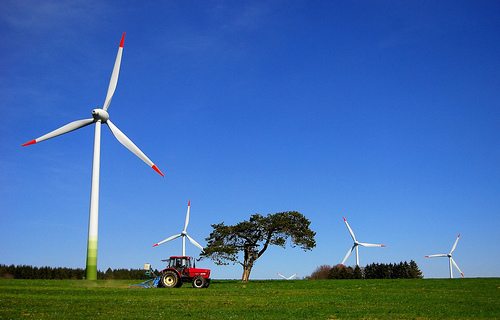
Almost 40% of farmers are using clean energy across the UK, compared to just 5% in 2010, according to a new survey. However, the majority feel the full potential of renewables is not being met.
The joint research, Farms as power stations by Nottingham Trent University, Forum for the Future and Farmers Weekly, collected the opinions of around 700 farmers.
Although a large number have chosen to adopt renewable sources of energy – especially solar, wind and biomass energy – 76% believes renewable energy can still achieve a lot more in the agriculture industry.
Professor Eunice Simmons, the dean of Nottingham Trent University’s School of Animal, Rural and Environmental Sciences, said, “It’s very positive news that renewables are becoming more popular with UK farmers – and this trend looks set to continue over the coming years.
“It’s clear, however, that more needs to be done by the government in terms of communicating the benefits, developing a more coherent policy and addressing conflicting messages.”
Among the challenges outlined by respondents are the high investment costs, the planning process and opposition from families and local communities.
Iain Watt, principal sustainability adviser at Forum for the Future, said, “We’d like to see a planning and policy regime that does more to support farm-scale renewables; better financing arrangements; a revamped grid that makes it easy for rural communities to sell their electricity; and an established market for farm-grown green power. We think we can achieve all that and more through coordinated action.”
Respondents recognised clean energy’s contribution to keeping business costs down, ensuring financial returns and contributing to greenhouse gas reduction and energy security.
Mitigating emissions derived from the agricultural sector would be a significant step forward. The industry is currently responsible for about 12% of global greenhouse gas emissions and is the main source of methane and nitrous oxide – emitted by livestock and fertiliser respectively.
In May, a survey revealed that 95% of farmers thought renewable energy would play a key role in the future of British agriculture, but many were confused about the options. To fill this gap, cleantech agency CCgroup published a report to help farmers consider the opportunities around investing in clean energy.
Further reading:
How to talk renewables so farmers and landowners listen
Report seeks to bridge communication gap between farmers and renewables
The role of agriculture in promoting a sustainable economy
How we put this together
Blue & Green Tomorrow's editorial desk reports on ethical investment, clean energy, and sustainable living.
- Published
- Sources
- Primary reporting
- Standards
- Corrections policy · About · Report an error
Keep moving along the spectrum
The same desk, then neighbouring desks along the brand spectrum.





