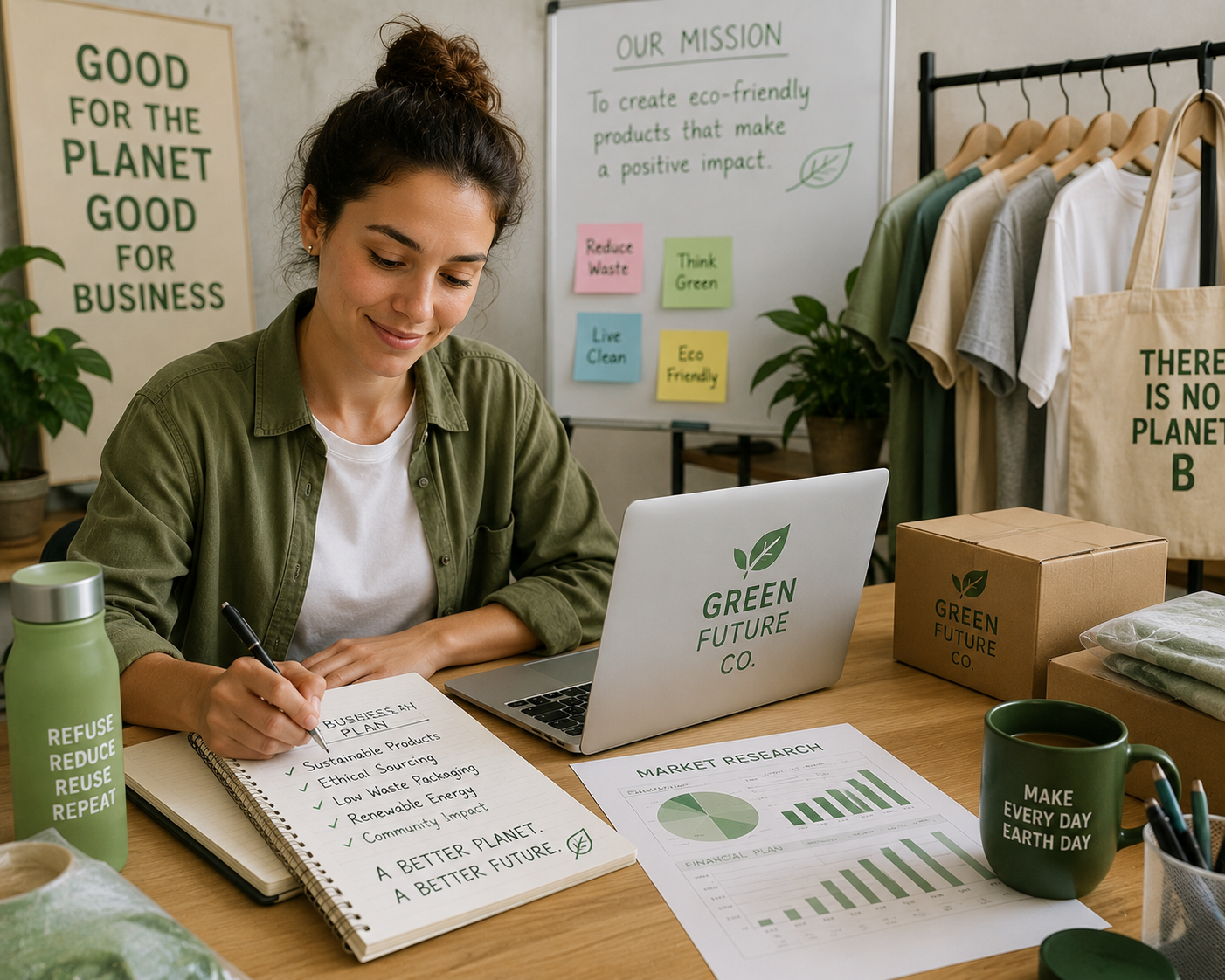

One of the things we write about a lot at Blue and Green Tomorrow is how people can build businesses that make money while reducing harm to the planet. It is becoming more important for entrepreneurs to think about waste, energy use, sourcing, packaging, transportation, and long-term trust before they launch. You can also make stronger choices early by picking a business structure that supports growth, separates personal and business risk, and helps the company look more serious.
Starting a green business can be a smart way to meet customer demand while building something with a purpose beyond short-term sales. It is also a good reason to think about forming an LLC, because the right structure can help protect the owner while giving the business room to grow. Keep reading to learn more.
Green Businesses Can Grow Stronger With the Right Structure
Freya Pratty of Sifted says in her article “For all the ESG talk, just 7% of startups have an actual net zero plan” that companies are not being as focused on sustainability as they claim, and just 7% of startups have a policy in place to achieve net zero carbon. “More startups are implementing policies to improve their performance against ESG metrics, given research which shows such actions can improve performance. Talent, customers and investors have also started to demand more progress.”
You should see that statistic as both a warning and an opening for new green businesses. There are many companies talking about climate goals, cleaner products, and social impact, but far fewer are putting clear plans in place. Something that can help a new business stand out is making its environmental claims specific, measurable, and easy for customers to check. Another thing founders can do is build sustainability into the business model from the start instead of adding it later as a marketing angle.
Plastic Bank author Estee Lutte Engao writes, “A YouGov survey showed that 55% of global consumers are skeptical about brands’ sustainability claims. To overcome this, brands must prioritize transparency and authenticity in their operations. One effective solution is partnering with Plastic Bank, a social fintech that empowers vulnerable communities to exchange discarded plastic for money and social benefits.” It is a reminder that customers may support green brands, but they still want proof before they trust them.
There are also practical reasons to make a green business an LLC. An LLC can help separate the owner’s personal assets from the company’s debts and legal claims, which may matter when a business is selling products, hiring contractors, signing leases, or working with suppliers. Another thing an LLC can offer is a more professional structure for opening business bank accounts, signing contracts, and managing taxes.
You can benefit from this structure even if the company starts small. A green cleaning company, recycling service, eco-friendly product shop, repair business, sustainable packaging brand, or consulting firm may all face costs, customer claims, vendor disputes, or contract issues. It is easier to manage those risks when the business has its own legal identity and clean financial records. Something that also helps is that an LLC can make the company look more prepared when speaking with partners, lenders, investors, or larger clients.
Green businesses often ask customers to believe that their money is supporting a better choice. It is harder to earn that trust if the company has vague claims, poor records, or no clear plan for how it operates.
You should think of a green business as both a mission and a business that still needs strong planning. Another thing to remember is that good intentions do not replace contracts, insurance, accounting, customer service, or legal structure. There are many founders with strong environmental values, but the ones that last often treat structure, trust, and proof as part of the same strategy.
Starting a green business can be a good idea because it gives entrepreneurs a chance to meet real market demand while supporting cleaner habits and better choices. It is even stronger when paired with an LLC, since that structure can help protect the owner, organize the company, and give customers and partners more confidence.
The transition to a low-carbon economy is creating opportunities for entrepreneurs to build businesses that combine profitability with environmental impact. From renewable energy solutions to climate-focused software and sustainable materials, green tech startups are emerging across sectors.
Starting a green tech LLC allows you to turn environmental innovation into a structured, scalable business, but success depends on more than a compelling idea. You need a clear understanding of the market, strong technical and environmental credibility, and the right legal and operational foundations from day one.
Understanding the green tech market
The concept of green tech spans energy, mobility, waste reduction, agriculture, and beyond. What unites these sectors is the focus on reducing environmental harm while delivering measurable value.
Customer expectations within this space are evolving quickly. Businesses and consumers alike are demanding transparency, efficiency, and real impact. For some, this means reducing carbon emissions; for others, it’s about cutting energy costs or complying with regulations.
To position your venture effectively, identify a precise problem within this broad ecosystem. For example, a startup might focus on energy efficiency tools for small businesses or develop biodegradable alternatives to common packaging materials. Narrowing your focus helps clarify your value proposition and makes it easier to communicate your impact.
Market research should go beyond high-level reports. Analyze competitor offerings, review customer feedback, and pay attention to regulatory trends. Patterns often emerge around pricing gaps, performance limitations, or unmet sustainability goals—these are the opportunities where new green tech solutions can thrive.
Building expertise and credibility
Credibility is critical in green tech. Customers, partners, and investors need to trust that your solution delivers genuine environmental benefits, not just marketing claims.
Founders should invest in building both technical knowledge and environmental literacy. This could involve collaborating with sustainability experts, obtaining certifications, or participating in industry initiatives focused on climate innovation.
Specialization can also strengthen your positioning. Whether you focus on solar integration, water conservation systems, or circular economy solutions, deep expertise allows you to stand out in a crowded market.
Transparency is equally important. Clearly communicate how your product or service works, the impact it generates, and any limitations it may have. This level of honesty builds long-term trust and aligns with the expectations of environmentally conscious stakeholders.
Setting up your LLC and operational foundation
A strong legal and financial structure is essential when launching any startup, particularly in green tech where projects can involve higher upfront investment and regulatory complexity.
Many founders choose to form an LLC to separate personal and business assets while maintaining flexibility in management and taxation. Setting up your business properly from the start helps reduce risk and creates a more professional foundation for growth.
In addition to incorporation, establish clear systems for accounting, compliance, and reporting. Green tech businesses often need to track environmental metrics alongside financial performance, so integrating these processes early can save time and improve accuracy later.
You should also review any relevant environmental regulations, permits, or certifications required in your sector. Being proactive about compliance not only avoids disruption but also strengthens your credibility with investors and partners.
Attracting customers and building a mission-led brand
Green tech companies succeed when they combine strong functionality with a clear, authentic mission. Customers are increasingly drawn to businesses that demonstrate real environmental responsibility, but they still expect performance, reliability, and value.
Position your business as a solution provider rather than simply a “green” alternative. Highlight how your product improves efficiency, reduces costs, or solves a pressing problem while delivering environmental benefits.
Partnerships can play a key role in early growth. Collaborating with manufacturers, local authorities, or other sustainability-focused organizations can expand your reach and open up new opportunities. These relationships also help validate your offering in a practical, real-world context.
Your brand should reflect your environmental commitment consistently, from messaging and design to operations and supply chain choices. Case studies, measurable impact data, and transparent reporting can help demonstrate your effectiveness and build trust with your audience.
Scaling sustainably for long-term impact
Green tech startups often face a dual challenge: scaling quickly enough to compete while ensuring their environmental impact remains genuine and measurable.
Growth should be deliberate. Expanding too fast without robust systems in place can compromise both operational efficiency and sustainability standards. Instead, focus on refining your product, strengthening partnerships, and improving your impact metrics over time.
Recurring customers and long-term contracts can provide stability in what can otherwise be a volatile market. Building strong relationships with clients who share your sustainability goals often leads to more consistent revenue and deeper collaboration.
At the same time, stay responsive to change. Advances in technology, shifts in regulation, and evolving consumer expectations all shape the green tech landscape. Businesses that continue to learn, adapt, and innovate are the ones most likely to succeed.
Turning innovation into impact
Starting a green tech LLC signals your intent to contribute to a broader environmental transformation. By combining targeted market insight, technical credibility, and a solid operational foundation, you can create a venture that delivers both commercial success and meaningful impact.
The opportunities are significant, but so is the responsibility. Founders who approach green tech with clarity, discipline, and authenticity will be best positioned to build companies that not only grow, but help shape a more sustainable future.










Occupational Safety’s Overlooked Role in Environmental Accountability

Sustainable Commuting in Loveland: Balancing a Lower Carbon Footprint With Road Safety

What Separates a Career Shaping Environmental Policy From One Shaping Corporate Sustainability

The Human Primary Cells Behind Toxicology and Chemical-Safety Research

How Sustainable Business Has Changed in the Last Five Years: An Interview with Noa Shtang

The Green Traveler’s Guide to Bali Snorkeling and Diving – Low-Impact Ways to See the Reef

Why Eco-Tourists Choose the Liveaboard in Komodo

Eating Out Abroad? ePOS Systems Are Quietly Cutting Food Waste

PMS for Hotels Explained – The Hidden Software Making Your Stay Greener

The Eco-Case for a Liveaboard – Why the Greenest Way to See a Reef Might Be a Boat
What Separates a Career Shaping Environmental Policy From One Shaping Corporate Sustainability
Sustainable Commuting in Loveland: Balancing a Lower Carbon Footprint With Road Safety
Occupational Safety’s Overlooked Role in Environmental Accountability

 Features12 months ago
Top Agricultural Stocks to Watch
- Sustainability12 months ago
Sustainable Travel in Christchurch: A Greener Way to Explore
- Features12 months ago
Staying Healthy on the Road: Eco-Conscious Habits for Global Travelers
- Economy11 months ago
Repairing vs. Recycling: Why Fixing Delivers Bigger Gains