Monmouthshire to plant wild flowers to help bees

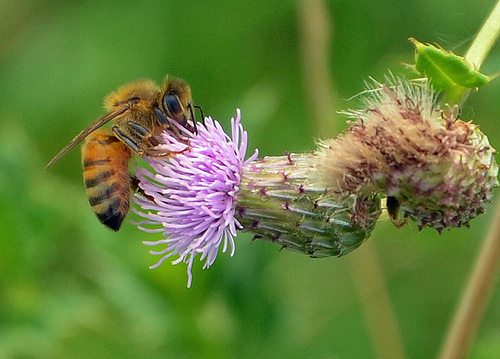
The Welsh county Monmouthshire has launched an initiative to plant wild flowers and create more grassy areas to increase pollination and the number of bees.
The council said it would plant wild flowers and cut grassed areas less often, in order to make the pollinators’ population thrive.
As a part of the scheme, the council will be able to save up to £34,000 from reduced use of contractors, water, plant pots and fertilisers, as wild flowers require less care.
The plan by Monmouthshire council is part of the Welsh government’s action plan for pollinators to fight the decline of bees.
In February, Welsh minister for natural resources and food Alun Davies announced £20,000 funds aimed at making Wales a ‘bee-friendly’ place.
He said, “Pollinators play a key role in our natural environment and, without them, Wales’s landscape would be much the poorer. We also wouldn’t have many of the fruits, vegetables and flowers we enjoy today.
“It is especially important that we create new bee-friendly havens in our towns and cities wherever possible – this could be done right across Wales in the grounds of our community halls, allotments, churches and schools.”
The funds were directed to community projects to plant trees and flowers to create a favourable environment for bees.
Pollinator insects have declined dramatically over the past decades, leading to concerns over food production as they play a crucial role in agriculture.
Scientists have indicated widespread use of neonicotinoid pesticides as a cause of the decline. Consequently, the European Commission has agreed on a two-year ban on the chemicals, which started in December last year.
Further reading:
Government urged to strengthen pollinator strategy to protect bees
Study: presence of bees ‘underestimated’ and improves value of crops
Bee Coalition: EU pesticide ban must be fully enforced to save pollinators
EU votes to impose landmark pesticide ban to save bees
Loss of $200bn pollinating services will be harmful, scientists warn
How we put this together

- Published
- Sources
- Primary reporting
- Standards
- About
Keep moving along the spectrum
The same desk, then neighbouring desks along the brand spectrum.





