Government calls for the public to help protect British bees
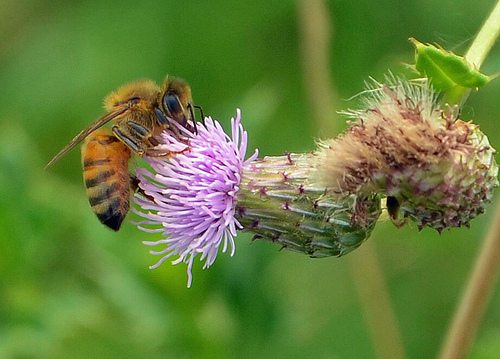
The Department for Environment, Food and Rural Affairs has called for Britons to take five simple actions to help bees thrive, creating a favourable environment for pollinators threatened by pesticides and extreme weather.
People are being encouraged to grow pollen-rich flowers, cut the grass less often, leave patches of land to grow wild, avoid using pesticides and to not bother insects.
It is hoped that such simple actions that everyone can do will help to create food sources and habitat for bees and other pollinators, vital to agriculture and the ecosystem.
Environment Minister Lord de Mauley said, during a conference organised by Plantlife, the Rare Breeds Survival Trust and The Wildlife Trusts, “Pollinators such as bees are vital to the environment and the economy and I want to make sure that we do all we can to safeguard them.
“That’s why we are encouraging everyone to take a few simple actions and play their part in helping protect our bees and butterflies. We will be publishing a nationwide strategy for pollinators later this year to set out everything that we can do to help pollinators flourish.”
Bees have been declining all over Europe and the US for a series of reasons that include climate change, habitat loss, parasites and the widespread use of neonicotinoid pesticides, some of which have been banned in the EU in December.
Friends of the Earth executive director Andy Atkins commented, “The plight of our bees is high on people’s environmental concerns so it’s great to see government, businesses and communities launching this call to action to protect this iconic species.
“But the government must also play its part by strengthening its upcoming National Pollinator Strategy to address all the threats that bees face, especially by supporting farmers to cut pesticide use and halting the continued loss of vital habitat like meadows.”
Photo: Dunc(an) via Flickr

Further reading:
Warm spring and summer boost honeybees productivity in Somerset
Bee-killing neonicotinoids linked to farmland birds decline
Not enough honeybees in the UK to keep up with crop pollination
Loss of $200bn pollinating services will be harmful, scientists warn
Study: presence of bees ‘underestimated’ and improves value of crops
How we put this together
Blue & Green Tomorrow's editorial desk reports on ethical investment, clean energy, and sustainable living.
- Published
- Sources
- Primary reporting
- Standards
- Corrections policy · About · Report an error
Keep moving along the spectrum
The same desk, then neighbouring desks along the brand spectrum.