
We have written a lot of articles on water sustainability since Ryan acquired Blue and Green Tomorrow ten years ago. It is clear that 4 in 1 water taps are becoming part of the conversation around reducing waste and improving household water use.
Arabella Ruiz, an author for The Roundup, reports that 78 percent of consumers feel that sustainability is important, which shows how public attitudes are changing. You may be wondering whether 4 in 1 taps actually live up to those expectations, and there are several factors to consider before making that judgment. Keep reading to learn more.
Are 4 in 1 Water Taps Eco-Friendly
Stephanie Safdie, an author with Greenly, writes that household leaks can account for nearly 900 billion gallons of water across the country. Something that stands out is how much water is lost through everyday inefficiencies, and there are clear opportunities for better systems to reduce that waste.
The EPA reports that the average family can waste 180 gallons per week, or 9,400 gallons of water annually. Another thing that becomes clear is that small daily habits add up over time, and there are ways that improved fixtures can help limit unnecessary usage.
You might notice that 4 in 1 taps combine filtered, boiling, chilled, and regular water into one system, which can reduce reliance on multiple appliances. It is possible that this consolidation leads to lower energy use, especially when compared to running separate devices for each function.
There are also environmental considerations tied to how often people boil water using kettles or stovetops. Something that often gets overlooked is how repeated heating cycles consume energy, and there are cases where instant hot water systems reduce repeated energy demand.
You should also think about how these taps can cut down on bottled water usage by providing filtered drinking water at home. Another thing that matters is how reducing plastic waste contributes to a lower environmental footprint over time.
There are potential downsides as well, including the energy required to keep water heated or chilled within the system. It is necessary to compare long-term usage patterns, and there are situations where constant heating may offset some of the environmental gains.
You can see that installation quality and maintenance play a role in determining how eco-friendly these systems are. Something that becomes important is preventing leaks and ensuring proper setup, and there are benefits when systems are maintained correctly.
You might conclude that 4 in 1 taps offer a mix of environmental advantages and trade-offs depending on usage habits. It is clear that thoughtful use and proper installation can influence whether these systems contribute to reduced water and energy waste.
In an era where environmental consciousness shapes our purchasing decisions, homeowners are increasingly scrutinising every aspect of their dwellings for sustainability credentials. The humble kitchen tap, once a simple fixture for dispensing water, has evolved into a sophisticated appliance offering multiple functions. Enter the 4 in 1 tap – a modern marvel that promises convenience by delivering filtered cold water, boiling water, and standard hot and cold water from a single spout. But as we embrace this technological advancement, an important question emerges: are these multi-functional taps genuinely eco-friendly, or do they represent another energy-hungry appliance disguised as innovation?
Understanding the environmental impact of 4 in 1 taps requires a nuanced examination of their energy consumption, water efficiency, and broader effects on household resource usage. This article delves into the ecological credentials of these increasingly popular fixtures, weighing their benefits against potential drawbacks to help you make an informed decision about whether they deserve a place in your sustainable home.
What Exactly Is a 4 in 1 Tap?
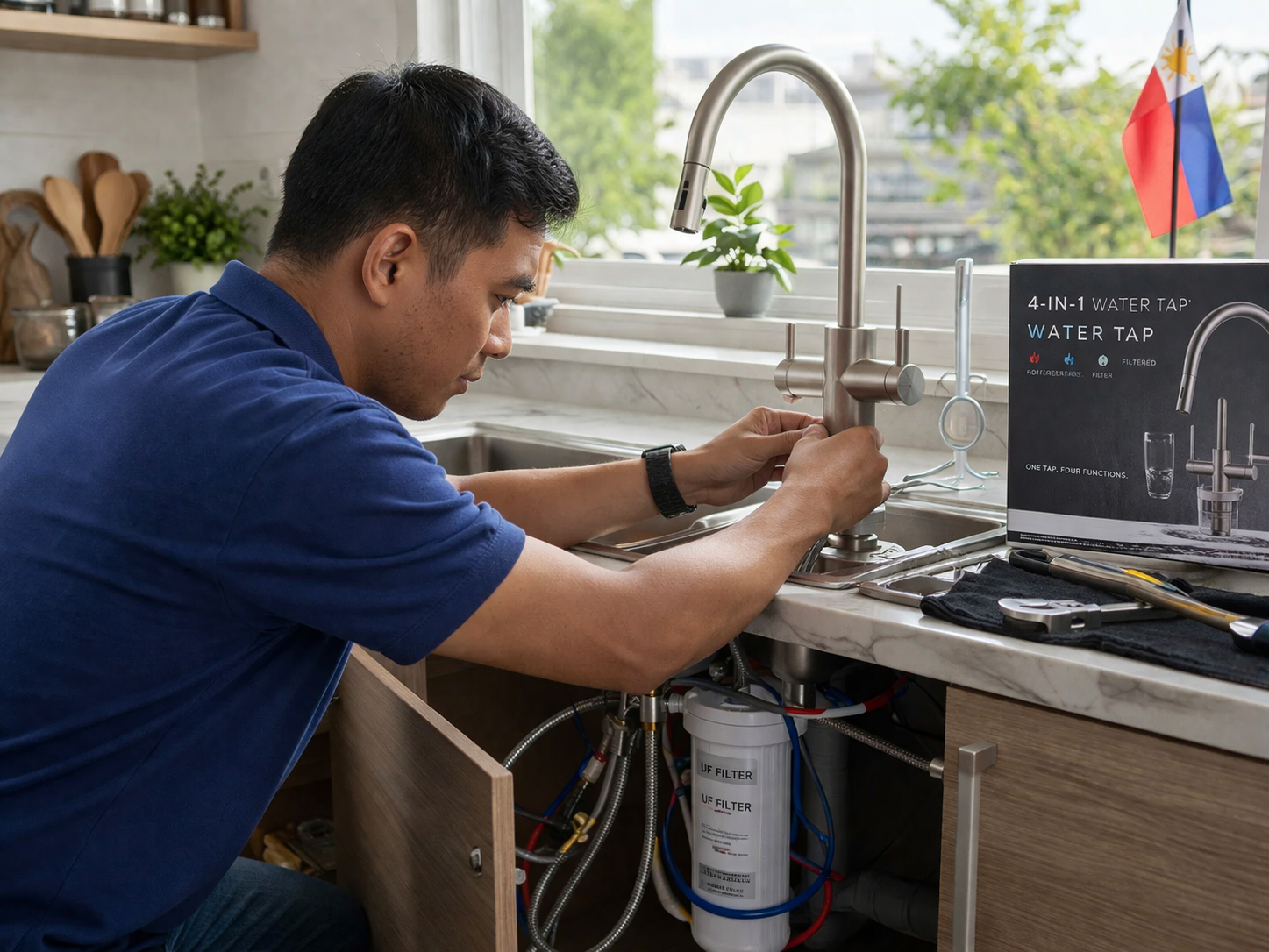
Before evaluating their environmental credentials, it’s essential to understand what 4 in 1 taps like Qmpress actually do. These integrated systems combine a standard mixer tap with an advanced filtration and heating unit. Typically, they provide four distinct water outputs: regular cold water, regular hot water, filtered cold water, and instant boiling water. Some premium models extend this functionality to five or even six options, adding features like sparkling water or extra-hot water for specific purposes.
The system comprises the visible tap unit and a compact boiler and filtration system housed beneath the kitchen sink. This under-counter unit heats and filters water on demand, eliminating the need for separate kettles and water filter jugs. The convenience factor is undeniable – no more waiting for kettles to boil or remembering to refill filter jugs – but convenience and sustainability don’t always walk hand in hand.
Energy Consumption: The Critical Factor
The most significant environmental consideration for 4 in 1 taps centres on energy consumption. The under-sink boiler maintains water at near-boiling temperatures continuously, which naturally raises concerns about standby energy usage.
Modern 4 in 1 tap systems typically consume between 10 and 30 watts of energy in standby mode to maintain water temperature. Whilst this might sound modest, it translates to approximately 87 to 262 kilowatt-hours annually if the unit operates continuously. To contextualise this figure, it’s comparable to running an energy-efficient refrigerator or leaving several LED light bulbs on permanently.
However, this energy expenditure must be measured against the alternative. Traditional kettles, which most households use multiple times daily, consume between 2,000 and 3,000 watts whilst boiling. If you’re boiling a kettle six to eight times per day – not uncommon in tea-loving British households – the cumulative energy usage often exceeds that of a 4 in 1 tap system. Studies suggest that households frequently overfill kettles, boiling far more water than needed, which compounds energy wastage.
The crucial distinction lies in usage patterns. For households with high hot water demands for beverages, cooking, and food preparation, 4 in 1 taps generally prove more energy-efficient than repeated kettle usage. Conversely, for single occupants or those who rarely require boiling water, a traditional kettle used judiciously might be the greener choice.
Water Efficiency and Waste Reduction
Beyond energy considerations, 4 in 1 taps offer compelling water conservation benefits that strengthen their environmental credentials considerably.
One of the most significant advantages involves eliminating water waste from running taps whilst waiting for hot water to arrive from a distant boiler. With instant boiling water available at the tap, there’s no need to run water until it reaches the desired temperature. In households with traditional systems, litres of water can disappear down the drain daily during this waiting period.
Furthermore, the precise dispensing nature of 4 in 1 taps encourages users to draw only the water they need. The deliberate action required to activate the boiling water function – typically involving a safety mechanism like a push-and-turn motion – makes users more conscious of their consumption. This contrasts sharply with the common habit of overfilling kettles, where excess boiled water often goes unused and requires re-boiling later.
The integrated filtration system presents another environmental advantage by potentially eliminating the need for bottled water. Millions of single-use plastic bottles enter the waste stream annually from households that prefer filtered or bottled water over tap water. By providing palatable, filtered water on demand, 4 in 1 taps can significantly reduce plastic consumption and the associated environmental costs of bottle production, transportation, and disposal.
Longevity and Build Quality
The environmental impact of any appliance extends beyond operational efficiency to encompass its entire lifecycle, including manufacturing, longevity, and eventual disposal.
Quality 4 in 1 tap systems are typically built to last 10-15 years or more, with replaceable filters and serviceable components. This durability compares favourably to cheaper kettles that might require replacement every two to three years. The embodied energy and resources invested in manufacturing a single long-lasting tap system prove more sustainable than producing multiple kettles over the same period.
However, this advantage only materialises if the system is properly maintained and actually achieves its potential lifespan. Regular filter changes are essential, and these consumables do create ongoing environmental impact through manufacturing and disposal. Nonetheless, filter cartridges typically last three to six months and are considerably less resource-intensive than the alternatives they replace.
Premium brands often offer better repairability, with available spare parts and customer service support extending product life. When evaluating 4 in 1 taps from an environmental perspective, investing in reputable brands with strong warranties and support infrastructure makes ecological as well as economic sense.
The Material Consideration
Most 4 in 1 taps are manufactured from stainless steel, brass, and chrome – materials with established recycling pathways. The durability of these materials contributes to product longevity, whilst their recyclability at end-of-life reduces environmental impact. However, the mining, processing, and manufacturing of these metals do carry significant environmental costs.
The under-counter units contain electronic components, heating elements, and insulation materials that complicate recycling. As with many modern appliances, proper disposal through appropriate recycling schemes becomes important to prevent valuable materials ending up in landfill.
Installation and Household Integration
The environmental credentials of 4 in 1 taps can be enhanced or diminished by how they integrate with broader household systems. When combined with renewable energy sources such as solar panels, the carbon footprint of the standby energy consumption reduces substantially or even disappears entirely.
Additionally, some advanced models offer programmable features allowing users to reduce or switch off the heating function during periods of non-use, such as overnight or during holidays. These intelligent controls can significantly reduce energy consumption whilst maintaining the convenience benefits during peak usage times.
The Verdict: Context Matters
Declaring 4 in 1 taps universally eco-friendly or environmentally detrimental would be overly simplistic. Their sustainability credentials depend heavily on individual circumstances, usage patterns, and the alternatives they replace.
For households with high hot water demand, multiple occupants, or frequent kettle use, 4 in 1 taps generally represent an environmentally sound choice. The energy efficiency gains from eliminating repeated kettle boiling, combined with water conservation benefits and reduced plastic waste from bottled water, create a compelling environmental case.
However, for minimal users or those already practising efficient kettle usage, the continuous standby consumption might tip the balance unfavourably. In such scenarios, traditional methods combined with conscious usage habits could prove greener.
The key to maximising the environmental benefits of 4 in 1 taps lies in selecting quality systems with good insulation and energy efficiency ratings, maintaining them properly, and using them mindfully. When installed in appropriate contexts and operated intelligently, these sophisticated fixtures can indeed contribute to a more sustainable household. They represent not just a convenience upgrade, but a considered step towards reducing our domestic environmental footprint – provided we choose and use them wisely.














What Separates a Career Shaping Environmental Policy From One Shaping Corporate Sustainability

The Human Primary Cells Behind Toxicology and Chemical-Safety Research

How Sustainable Business Has Changed in the Last Five Years: An Interview with Noa Shtang

The Green Traveler’s Guide to Bali Snorkeling and Diving – Low-Impact Ways to See the Reef

Why Eco-Tourists Choose the Liveaboard in Komodo

Eating Out Abroad? ePOS Systems Are Quietly Cutting Food Waste

PMS for Hotels Explained – The Hidden Software Making Your Stay Greener

The Eco-Case for a Liveaboard – Why the Greenest Way to See a Reef Might Be a Boat

Future-Proofing the Sustainable Workplace: Integrating Solar PV and Smart EV Infrastructure

Why Outdoor Offices Are the Future of Sustainable Work

 Features11 months ago
Top Agricultural Stocks to Watch
- Sustainability11 months ago
Sustainable Travel in Christchurch: A Greener Way to Explore
- Features11 months ago
Staying Healthy on the Road: Eco-Conscious Habits for Global Travelers
- Economy10 months ago
Repairing vs. Recycling: Why Fixing Delivers Bigger Gains