Environment
Occupational Safety’s Overlooked Role in Environmental Accountability

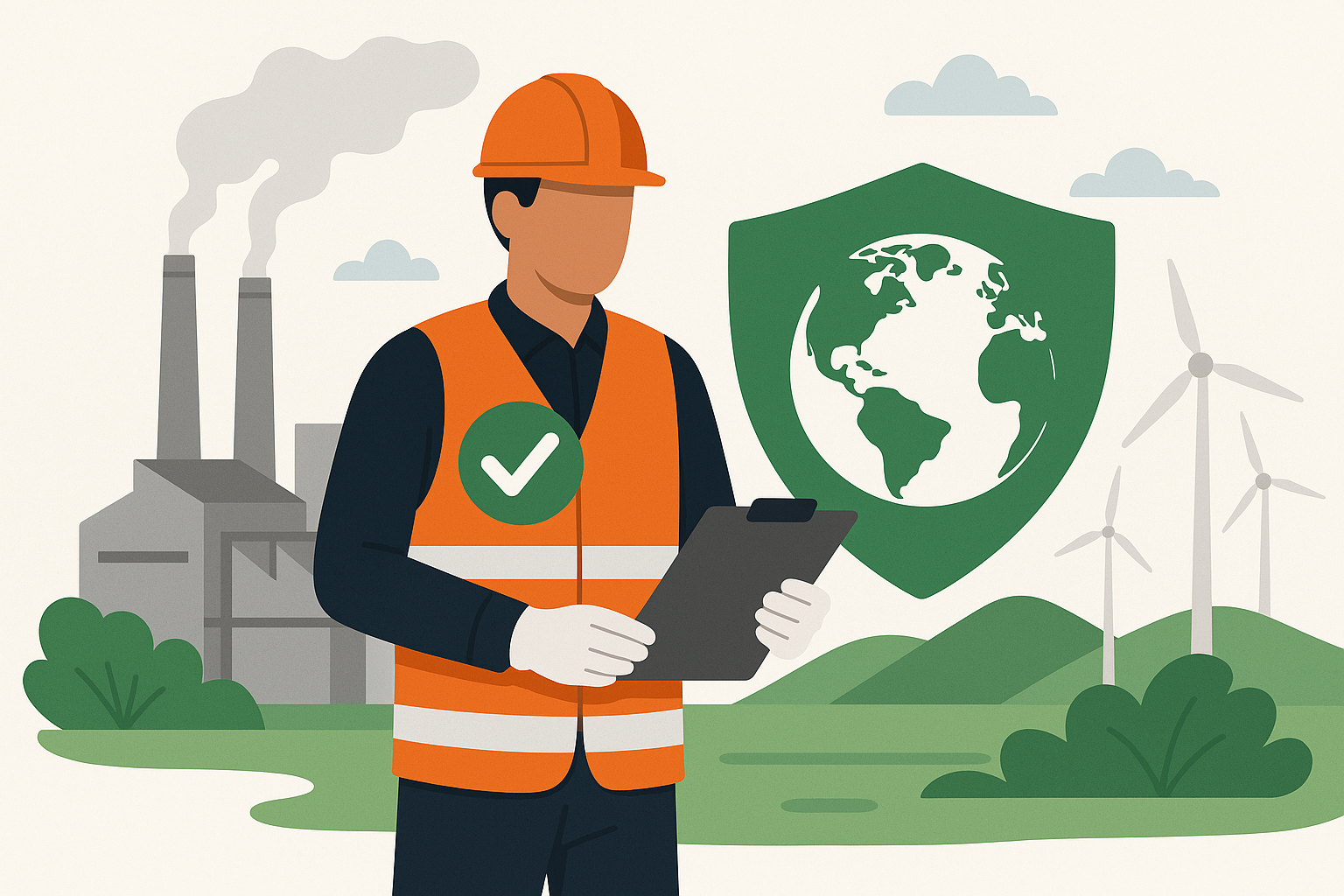
Ground-level workplace inspections directly verify corporate sustainability claims, filling the growing gap between public ESG promises and actual facility practices. A strong safety culture relies on health and safety inspectors to enforce operational standards on the factory floor, ensuring daily environmental accountability.
Health and safety inspectors test whether facilities meet mandatory safety standards and environmental regulations. They serve as the practical baseline for corporate accountability, yet many executive teams still view inspection work as a routine back-office task.
This analysis examines what safety inspection work requires, how it intersects with environmental compliance, and why sustainability programs need physical verification.
The Accountability Gap Behind ESG Reporting
Voluntary sustainability disclosures and third-party ESG reporting frameworks grew rapidly over the past decade. Standard frameworks like the Global Reporting Initiative give companies a structure to report environmental and social metrics.
That growth drew sharp criticism. Self-reported sustainability claims often lack independent verification, leaving investors dependent on unverified corporate statements. In fact, a 2023 survey by PwC found that 94% of global investors believe corporate reporting contains unsupported claims.
When executives ask what is the point of ESG reporting without physical auditing, the answer is clear: paper commitments fail without physical verification.
Corporate disclosures outline targets, but written reports cannot confirm daily conditions on a factory floor. Direct site inspections verify whether environmental standards hold up during real operations.
Inside the Role: What the Job Actually Involves
Field inspections combine direct site visits, hazard detection, regulatory compliance checks, clear documentation, and enforcement steps. Each walkthrough generates an audit trail that external regulators and internal managers can review.
Readers who want a closer look at what a health and safety inspector’s job actually involves will find the daily realities of field auditing detailed clearly. The position demands far more technical precision than standard administrative roles.
Inspectors must evaluate exposure thresholds, ergonomic rules, and spill containment protocols. They verify whether physical workplace practices match official policies.
Communication skills matter just as much. Inspectors regularly speak with plant managers and frontline workers, adjusting their approach for each group.
Plant managers need clear audit findings and practical corrective actions. Frontline workers understand daily operational hazards best, but they share details only when inspectors build working trust.
Standards like ISO 45001 set criteria for occupational health and safety management systems. Inspectors audit these systems to confirm that safety rules remain active on the floor.
Demand for verification expertise tracks regulatory enforcement cycles. The Occupational Safety and Health Administration (OSHA) conducted over 34,000 workplace inspections in fiscal year 2024, demonstrating how federal oversight drives compliance needs.
In 2025, federal penalties for willful OSHA violations reached $165,514 per instance, raising the financial risk of uncorrected workplace hazards. Structured osha training equips facility teams to resolve hazards before official inspections occur.
Building a Safety Culture at the Intersection of Safety and Environmental Care
Occupational safety and environmental protection share the same physical operational ground. A single walkthrough flags worker chemical exposure while simultaneously checking hazardous waste storage and equipment emissions.
This connection reflects practical factory conditions. A poorly maintained chemical storage drum threatens employee safety while creating an immediate soil contamination risk.
ISO 14001 defines standards for environmental management systems. Companies frequently pair it with ISO 45001 during combined audits, simplifying EHS management practices across operations.
Inspectors are often the first staff members to spot environmental non-compliance. While their formal title targets workplace health, daily floor walks place them where chemical leaks and improper disposal first occur.
Unlabeled waste containers, failing exhaust systems, or leaking valves reveal dual risks. Alert inspectors escalate these physical defects before they trigger regulatory fines or environmental damage.
Reframing safety verification as a core sustainability task changes how executive teams budget for field compliance. Operations gain direct oversight instead of relying on annual administrative reviews.
Separating workplace safety from environmental compliance causes redundant audits and fragmented data. Integrating both functions gives leadership a clear picture of facility risk from one unified inspection report.
Unified inspections produce verifiable records detailing exactly what was checked, when, and by whom. These detailed logs give third-party ESG auditors concrete proof of operational compliance.
Frontline safety inspectors see physical hazards before they become public environmental liabilities. When companies treat safety audits as core corporate governance, ground-level compliance actually sticks. Ryan Kh, Managing Editor at Blue & Green Tomorrow
Why This Role Deserves More Strategic Attention
Regulators and institutional investors scrutinize corporate ESG reports more aggressively every year. Physical site inspection provides verifiable proof that self-reported sustainability claims reflect real conditions on the factory floor.
Many organizations spend heavily on corporate sustainability reports while underfunding field verification teams. Marketing budgets often exceed the resources allocated to on-site inspectors.
That funding gap creates significant compliance risk. Publishing aggressive carbon or safety targets without adequate inspection capacity leaves companies vulnerable during formal regulatory audits.
Treating safety inspection as a strategic asset strengthens corporate credibility. Companies with rigorous auditing programs back up public commitments with verified evidence.
Strategic recognition also helps retain experienced compliance personnel. When inspectors have a voice in executive decisions, site safety improves across all facilities.
Conclusion
The gap between corporate sustainability promises and verified factory performance remains wide. Closing that gap requires investing in field inspectors who verify standards on the ground. Fostering a genuine safety culture alongside rigorous occupational safety auditing ensures companies can prove their environmental compliance rather than just claiming it.



Occupational Safety’s Overlooked Role in Environmental Accountability

Sustainable Commuting in Loveland: Balancing a Lower Carbon Footprint With Road Safety

What Separates a Career Shaping Environmental Policy From One Shaping Corporate Sustainability

The Human Primary Cells Behind Toxicology and Chemical-Safety Research

How Sustainable Business Has Changed in the Last Five Years: An Interview with Noa Shtang

The Green Traveler’s Guide to Bali Snorkeling and Diving – Low-Impact Ways to See the Reef

Why Eco-Tourists Choose the Liveaboard in Komodo

Eating Out Abroad? ePOS Systems Are Quietly Cutting Food Waste

PMS for Hotels Explained – The Hidden Software Making Your Stay Greener

The Eco-Case for a Liveaboard – Why the Greenest Way to See a Reef Might Be a Boat
What Separates a Career Shaping Environmental Policy From One Shaping Corporate Sustainability
Sustainable Commuting in Loveland: Balancing a Lower Carbon Footprint With Road Safety
Occupational Safety’s Overlooked Role in Environmental Accountability

 Features12 months ago
Top Agricultural Stocks to Watch
- Sustainability12 months ago
Sustainable Travel in Christchurch: A Greener Way to Explore
- Features12 months ago
Staying Healthy on the Road: Eco-Conscious Habits for Global Travelers
- Economy11 months ago
Repairing vs. Recycling: Why Fixing Delivers Bigger Gains