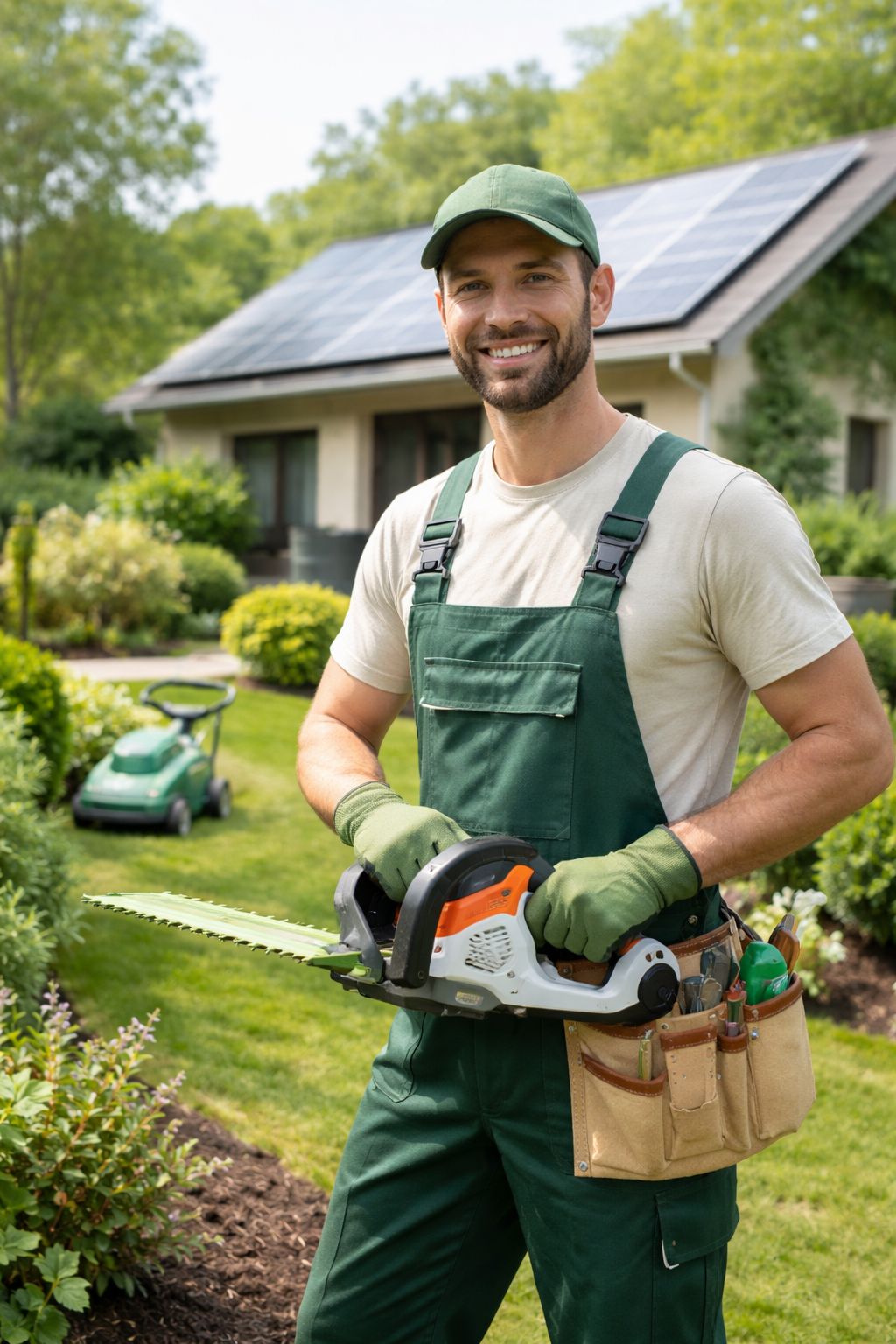


Sustainable landscaping isn’t some fringe movement anymore. It’s quickly becoming the go-to approach for homeowners who want outdoor spaces that look great and work with nature instead of fighting it.
There are a lot of things that you need to do if you want to live an eco-friendly life. We have covered a number of them in our previous articles over the years. Many people want to make changes at home. Ruby Homes reports that 63% of Americans want to live in eco-friendlier homes and there are a number of ways that they can do so.
One of the things that you may want to consider is engaging in eco-friendly landscaping. We covered some of the ways that they can do so in some of our previous articles like this one.
For a long time, the typical residential yard followed a formula we all know: big lawn, chemical fertilizers, weekly mowing, maybe some decorative shrubs along the foundation. It looked fine. It also guzzled water, poisoned soil biology, and cost a small fortune to keep up. We have talked about how using an eco-friendly fertilizer can make a big difference. There are some other things that you can do as well. Let’s get into some of the options that you can follow.
That’s shifting now. Across Canada and North America, homeowners are rethinking what their yards should actually do. Some want to cut their water bills. Others are tired of spending every Saturday behind a mower. A lot of people genuinely care about pollinators and local wildlife. And honestly, plenty of folks just want a yard that looks interesting instead of identical to every other house on the block. This can make a huge difference if you are trying to help be more eco-friendly.
The good news? You don’t have to choose between a sustainable yard and a beautiful one. In my experience, the most striking residential properties I’ve worked on are the ones that lean into local ecology rather than fighting it. They use fewer inputs, need less maintenance, and they honestly just look better with each passing season as the plantings fill in.
Here’s how homeowners are making this shift, and how you can start on your own property.
Rethinking the lawn
The biggest change most homeowners can make is also the most obvious: shrinking their traditional turfgrass lawn.
I’m not suggesting you rip the whole thing out. Lawns serve real purposes. Kids need somewhere to play, dogs need somewhere to run, and there’s something to be said for a bit of open green space. But it’s worth asking honestly: how much of your lawn do you actually step on?
That back corner nobody visits? The narrow strip along the side of the house that gets mowed but never used? The front yard that exists purely for curb appeal from the street? Those are all candidates for something better.
**What you can do with unused lawn areas:**
- **Native perennial gardens.** Once they’re established, native perennials need no mowing, almost no watering, zero fertilizer, and no pesticides. They also feed pollinators.
- **Groundcover plantings.** Low-growing plants like creeping thyme, clover, or native sedges give you a green, living surface without the mowing.
- **Wildflower meadow sections.** If you’ve got a larger yard, letting part of it grow as a wildflower meadow creates seasonal drama and supports biodiversity.
- **Mulched planting beds.** Converting unused grass to mulched beds with shrubs and perennials cuts your mowing time and builds habitat.
You don’t have to do it all at once. Converting even a fifth of your lawn to native plantings makes a real difference in how much water, chemicals, and weekend time your yard consumes.
Native plants are the backbone of it all
Native plants are species that evolved in your region over thousands of years. They’re built for your soil, your rainfall patterns, your temperature swings, your winters. They’ve co-evolved with local bees, butterflies, and birds. And they need dramatically less babysitting than imported ornamentals.
The practical upside is hard to ignore:
- **Water efficiency.** After one to two growing seasons of establishment, most natives survive on rainfall alone in a normal year. No irrigation needed.
- **No fertilizer required.** They’re adapted to local soil conditions already.
- **Fewer pest problems.** Plants growing where they belong are naturally tougher against local pests and diseases, which means you can skip the pesticide aisle entirely.
- **Pollinator support.** Native plants offer the specific pollen and nectar that local bees and butterflies actually depend on. A lot of non-native ornamentals produce flowers that look pretty but aren’t usable by local pollinators.
For Canadian gardeners, some standout native picks include:
- **Black-eyed Susan** (Rudbeckia hirta) for reliable summer-to-fall blooms.
- **Wild bergamot** (Monarda fistulosa), which bees and butterflies go absolutely wild for.
- **New England aster** (Symphyotrichum novae-angliae), giving you colour late in the season when almost nothing else is flowering.
- **Switchgrass** (Panicum virgatum) for structure and gorgeous fall tones.
- **Serviceberry** (Amelanchier), a native shrub or small tree that delivers spring flowers, summer berries for birds, and brilliant fall foliage.
Cutting your water use
Residential irrigation eats up a huge chunk of municipal water during summer months. Sustainable landscaping tackles this from two angles: picking plants that don’t need much water, and being smarter about delivering the water you do use.
### Smarter irrigation
If you do irrigate, it’s worth upgrading how you do it:
- **Drip irrigation** puts water right at the root zone, cutting evaporation and runoff compared to sprinklers. It works especially well for garden beds.
- **Smart controllers** pull local weather data and soil moisture readings to adjust watering on the fly. They solve the absurd problem of sprinklers running during a rainstorm.
- **Rain sensors** are simpler and cheaper. They just override your irrigation schedule when it’s rained recently.
### Collecting rainwater
Rain barrels hooked up to your downspouts capture water that would otherwise run off to the storm drain. You can then use it on your garden beds.
A single 200-litre barrel collects enough from one decent rainfall to water a modest garden for several days. Add more barrels or step up to a cistern system and the savings grow.
### Permeable hardscaping
Traditional concrete driveways and solid paver patios create surfaces where water can’t soak in. It all runs off, picking up pollutants and overwhelming storm drains. Permeable options let water filter through into the ground:
- **Permeable pavers** have wider joints or porous material built in.
- **Gravel or crushed stone** driveways and paths are fully permeable by nature.
- **Porous concrete and asphalt** products exist that allow infiltration while still giving you a solid surface to walk or drive on.
Keeping more water on your property means cleaner local waterways and less pressure on municipal stormwater systems.
Rain gardens: nature’s drainage fix
A rain garden is basically a shallow planted depression that catches runoff from your roof, driveway, and other hard surfaces. Water pools in the garden, gets filtered through soil and plant roots, and slowly soaks into the ground instead of rushing to the storm drain.
I’ve installed a few of these for clients who had persistent drainage issues, and the results surprised even me. What started as a functional fix became the favourite feature of their yard.
Rain gardens pull their weight in several ways at once:
- **Stormwater management.** They reduce how much runoff actually leaves your property.
- **Water filtration.** Plant roots and soil microbes strip out sediment, nutrients, and metals before water reaches the groundwater table.
- **Habitat creation.** Planted with natives, a rain garden becomes a small ecosystem that pollinators and beneficial insects gravitate toward.
- **Visual appeal.** A well-designed rain garden is a garden first. The drainage function is just a bonus.
The best spot for one is a natural low point in your yard that already collects runoff, at least three metres from your foundation, in soil with decent drainage. If you’ve got heavy clay, you can amend it with compost and sand.
Soil health: the part nobody thinks about
Healthy soil is what holds everything together in a sustainable landscape, yet it’s the piece most homeowners completely overlook. When your soil is in good shape, it retains moisture on its own (less watering), provides nutrients naturally (less fertilizer), and supports the earthworms, fungi, and bacteria that keep plants thriving.
It also sequesters carbon, which is a small contribution to climate mitigation but a real one when you multiply it across thousands of residential properties.
The simplest fix? Add organic matter. Compost, leaf mould, aged manure. Spread a few centimetres on your garden beds every year, or topdress your lawn with it. The improvement compounds over time.
What damages soil health: excessive tilling (destroys structure and microbial networks), chemical pesticides (kill beneficial organisms along with the pests), synthetic fertilizers (feed the plant but starve the soil biology), and compaction from heavy foot traffic or equipment.
Sustainable hardscaping choices
Going green with your yard isn’t just about plants. Patios, walkways, retaining walls, and edging all present chances to make better choices.
- **Locally sourced materials** cut transportation emissions. Natural stone from a regional quarry has a much smaller carbon footprint than stone shipped across an ocean.
- **Recycled or reclaimed materials** keep waste out of landfills and add character. Reclaimed brick, recycled concrete aggregate, salvaged stone.
- **Durability matters.** Quality pavers or natural stone that last decades are more sustainable than cheap materials you’ll replace in ten years. If you’re curious about what different landscaping projects actually cost in a Canadian market, [this breakdown of landscaping costs in Montreal for 2026](https://www.montrealpaysagementpro.com/en/blog/landscaping-costs-montreal-2026) gives a realistic picture of budgeting for materials that last.
Does any of this actually matter at scale?
Individual homeowners sometimes wonder if their choices make a difference against large-scale environmental problems. But residential landscapes collectively cover an enormous area. In many Canadian municipalities, residential land is the single largest land-use category.
When thousands of homeowners each convert some lawn to native plantings, install rain gardens, cut their irrigation, and drop the chemicals, the combined impact on water quality, pollinator populations, habitat connectivity, and local flooding is real and measurable. Every property is one piece of a much larger ecological picture.
Where to start
You don’t need a complete yard overhaul. Pick one or two things:
- **Shrink your lawn by ten to twenty percent** and fill the space with native plantings.
- **Ditch the chemical fertilizers and pesticides.** Healthy soil and proper mowing can maintain a solid lawn without them.
- **Set up one rain barrel** and use the collected water on your nearest garden bed.
- **Swap out underperforming annuals** for hardy native perennials in your existing beds.
- **Mulch every bare patch of soil** in your planting beds. It suppresses weeds, holds moisture, and builds soil health over time.
None of these steps is dramatic on its own. But string a few together over two or three seasons, and you’ll end up with a yard that looks better, costs less to keep up, takes less of your weekend, and quietly does some good for your local environment too.
Sustainable landscaping isn’t about perfection. It’s about direction. Make choices that move your property closer to something that works with nature, one season at a time.










Eco-Friendly Landscaping: How Homeowners go Green Outdoors

Do You Need Solar Panels for Whole Home Battery Backup?

Collisions Involving Sudden Door Openings from Parallel-Parked Cars

Eco-Friendly Workplaces and Storm Attendance Challenges

How Educational Administration Degrees Support Greener Schools

How Proactive Crisis Planning Supports Safer and More Sustainable Operations

Safeguarding What Cannot Be Replaced: Managing Irreplaceable Assets In Agriculture

Quality Control As A Sustainability Lever In Manufacturing

How Paperless Payroll Helps Cut Business Carbon Emissions

Stem Cell Transplant and Sustainable Healthcare Choices
How Educational Administration Degrees Support Greener Schools
Do You Need Solar Panels for Whole Home Battery Backup?
Collisions Involving Sudden Door Openings from Parallel-Parked Cars
Eco-Friendly Workplaces and Storm Attendance Challenges
Eco-Friendly Landscaping: How Homeowners go Green Outdoors

 Features12 months ago
Eco-Friendly Cryptocurrencies: Sustainable Investment Choices
- Energy12 months ago
The Growing Role of Solar Panels in Ireland’s Energy Future
- Energy11 months ago
Growth of Solar Power in Dublin: A Sustainable Revolution
- Energy11 months ago
Renewable Energy Adoption Can Combat Climate Change