
One of the most important things that we like to talk about in Blue and Green Tomorrow is how everyday home choices influence both environmental impact and long-term household spending. It is easy to underestimate how much heating and cooling decisions affect sustainability and cost over the life of a home.
You may start researching heat pumps because energy bills keep rising, or because climate concerns are becoming harder to ignore. It is common to feel unsure about which system balances affordability with lower emissions over time. Keep reading to learn more.
Choosing a Heat Pump With Sustainability and Cost in Mind
A report from the International Energy Agency explains that with today’s refrigerants, heat pumps still reduce greenhouse gas emissions by at least 20% compared with a gas boiler. It is reassuring that this reduction occurs even before accounting for cleaner electricity sources. You can lower household emissions simply by switching technologies rather than changing daily habits.
You might think cooling demand is only a regional issue, but global data tells a different story. H Ritchie from Our World in Data writes that air conditioning accounts for 7% of global electricity use and 3% of carbon emissions. There are clear links between cooling demand and worldwide power generation trends.
You may assume that appliances or electronics dominate home energy use. A study from the Center for Sustainable Systems at the University of Michigan states that heating and cooling account for 41% of energy used in U.S. residential carbon emissions. It is clear that indoor comfort systems carry far more weight than many people expect.
It is common to focus only on upfront pricing when comparing heat pumps. You can miss long-term savings if operating costs, system lifespan, and local climate performance are ignored. There are models designed specifically for colder regions that avoid costly backup heating.
You may find that rebates and tax credits shift the cost equation more than expected. There are federal, state, and utility programs that reduce installation expenses and shorten payback periods. It is helpful to research these incentives before selecting a system. You can often combine programs to reduce total cost significantly.
You may feel overwhelmed by technical specifications at first. It is worth taking time to match system capacity to your home size and climate instead of choosing the lowest price. You gain both financial stability and lower emissions by making a measured choice.
You can see that heating and cooling decisions sit at the center of household sustainability. It is this balance between environmental impact and long-term cost control that makes careful heat pump selection a practical step for many homes.
If you’re trying to choose between a ground-source heat pump and an air-source heat pump, the key differences come down to space, installation requirements, efficiency, and long-term cost. Both systems offer clean, renewable heating and cooling, but they work in completely different ways and suit different types of properties.
This guide explains how each system works and helps you decide which option is the better fit for your home.
What Is a Ground-Source Heat Pump?
A ground-source heat pump (sometimes called a geothermal heat pump) transfers heat from the ground into your home using a network of buried pipes known as ground loops. These loops can be installed horizontally in trenches or vertically through deep boreholes. Because the temperature beneath the surface stays remarkably stable throughout the year, ground-source systems maintain consistent efficiency regardless of outdoor weather.
Once installed, these systems are extremely durable. Ground loops can often last more than 50 years, and the indoor heat pump unit typically lasts around 20–25 years. For homeowners planning a long-term sustainable heating solution, ground-source systems offer some of the best lifetime performance available today.
What Is an Air-Source Heat Pump?
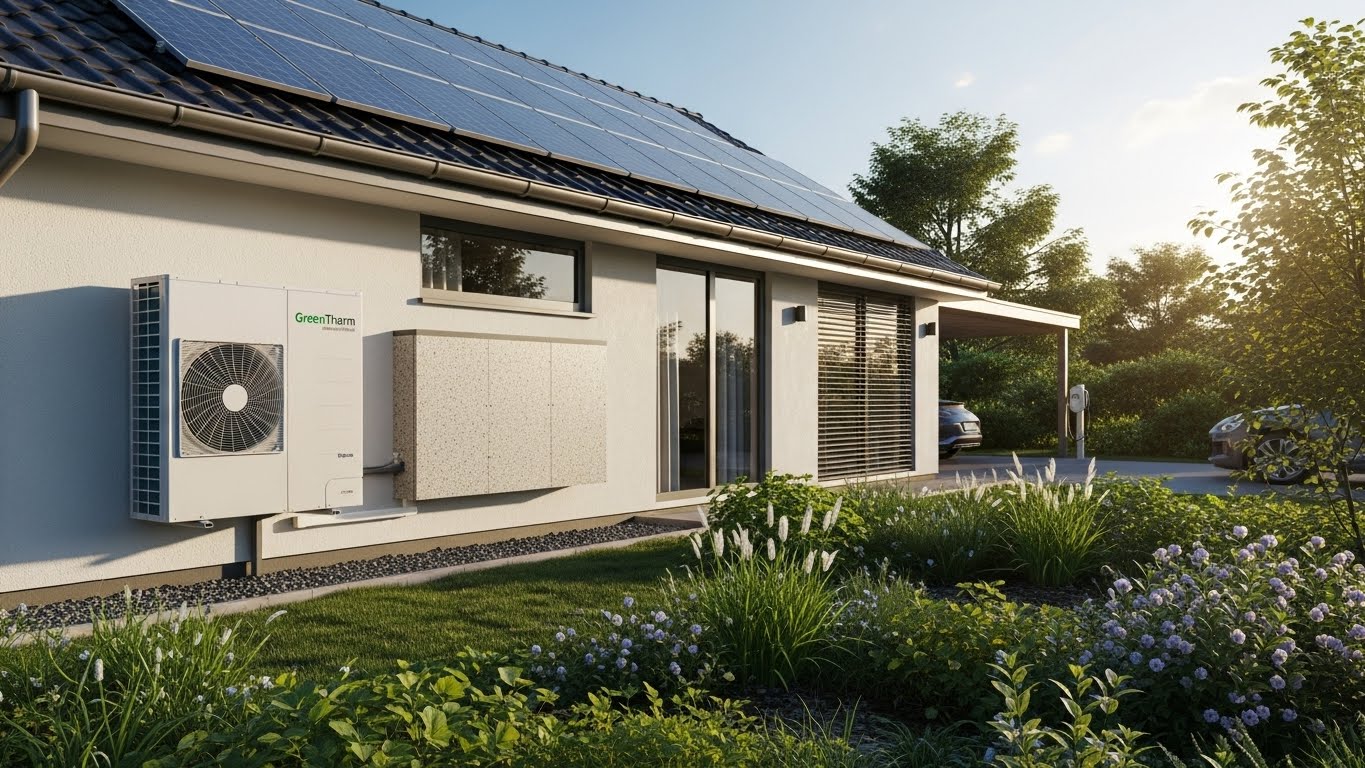
An air-source heat pump operates by extracting heat from the outdoor air, even in colder weather. Modern models are highly efficient and can produce three to four times more heat than the electrical energy they consume.
Air-source heat pumps are easier and faster to install than ground-source systems, making them a popular choice in urban and suburban areas. They require only an outdoor unit and an indoor air handler, similar to a traditional HVAC system or air conditioning setup. While their efficiency can drop slightly during extreme cold, many cold-climate models now perform well even at low outdoor temperatures.
Efficiency Comparison
Ground-source heat pumps typically deliver the highest year-round efficiency because they rely on stable underground temperatures. That means their performance barely changes between seasons.
Air-source heat pumps are still extremely efficient, but their output can vary depending on outdoor conditions. In mild climates, the gap between ground-source and air-source efficiency is smaller, while in colder regions, the underground loop of a ground-source system gives it a clear edge.
Installation Requirements
The installation process is one of the biggest differences between the two systems.
Ground-source heat pump installations require land for the underground loops. Horizontal systems need wide trenches, making them suitable for properties with available outdoor space. Vertical systems use boreholes drilled deep into the ground, which makes them possible even on smaller lots, but the drilling process is more technical.
Because installing the underground loop requires excavation, drilling equipment, and precise system balancing, homeowners should always use trained specialists for ground source heat pump installation, especially when working with vertical boreholes or varied soil conditions. A properly designed ground loop is critical for long-term performance.
Air-source heat pumps, by comparison, are much simpler to install. They typically require only an outdoor unit placed on a small slab or wall bracket and an indoor unit connected through insulated pipework. This faster, less disruptive process often makes air-source the more accessible option.
Upfront Costs vs Long-Term Savings
Ground-source systems usually have a higher upfront cost because of the excavation or drilling work required. However, their running costs are often lower, and the ground loop can last for decades, which spreads the investment over a long lifespan.
Air-source heat pumps are generally more affordable initially and provide significant efficiency gains compared to gas furnaces, oil boilers, or electric resistance heating. Over time, they deliver substantial energy savings, although their long-term running costs can be slightly higher than ground-source systems.
Choosing between them often comes down to whether a homeowner wants a lower upfront cost (air-source) or a lower lifetime cost (ground-source).
Environmental Impact
Both heat pump systems dramatically reduce emissions compared to fossil-fuel heating. Because heat pumps move heat instead of generating it through combustion, they produce far less carbon pollution. Heat pumps can reduce CO₂ emissions from household heating by at least 20%–80% today, even when powered by grids that still use fossil fuels.
Ground-source systems tend to deliver the highest carbon savings over time due to their stable efficiency and long lifespan. Air-source heat pumps still offer impressive environmental benefits and are often the easiest way for households to transition to renewable heating.
Which System Is Right for Your Property?
A ground-source heat pump is ideal if you have enough outdoor space or access for drilling and you want the highest long-term efficiency and lowest running costs. It’s an excellent choice for rural homes, large properties, or any homeowner planning to stay in their home for many years.
An air-source heat pump is the better option if you want a lower-cost, faster installation that still delivers significant emissions reductions and energy savings. It works well in suburban and urban settings where space is limited.










Are 4-in-1 Taps Worthwhile for Eco-Friendly Homes?

Pedestrian and Bicycle Accidents in Chicago’s Crowded Urban Areas

Neel Somani Discusses the Energy Market Design and How Pricing Actually Works

Eco-Friendly Landscaping: How Homeowners go Green Outdoors

Do You Need Solar Panels for Whole Home Battery Backup?

Collisions Involving Sudden Door Openings from Parallel-Parked Cars

Eco-Friendly Workplaces and Storm Attendance Challenges

How Educational Administration Degrees Support Greener Schools

How Proactive Crisis Planning Supports Safer and More Sustainable Operations

Safeguarding What Cannot Be Replaced: Managing Irreplaceable Assets In Agriculture
Collisions Involving Sudden Door Openings from Parallel-Parked Cars
Do You Need Solar Panels for Whole Home Battery Backup?
Eco-Friendly Workplaces and Storm Attendance Challenges
Eco-Friendly Landscaping: How Homeowners go Green Outdoors
Neel Somani Discusses the Energy Market Design and How Pricing Actually Works
Are 4-in-1 Taps Worthwhile for Eco-Friendly Homes?
Pedestrian and Bicycle Accidents in Chicago’s Crowded Urban Areas

 Energy12 months ago
Growth of Solar Power in Dublin: A Sustainable Revolution
- Energy12 months ago
Renewable Energy Adoption Can Combat Climate Change
- Environment12 months ago
The Sustainable use of Natural Resources: XP Upgreen by Expert Petroleum
- Energy9 months ago
Why Ireland Should Invest More in Solar Energy