Features
How Eco-Focused Buyers Are Shaping Mountain Luxury Markets

Since Ryan took over as the lead editor of Blue and Green Tomorrow, the coverage of sustainable consumer priorities in travel markets has grown sharper and more detailed. You can see how this shift has influenced conversations about mountain luxury homes, where eco-focused buyers carry distinct expectations.
A study from Statista from last year found that 80 percent of global travelers believed sustainable travel was important, which has shaped demand in destinations built around pristine natural settings. It is clear that this changing mindset influences purchasing decisions in luxury mountain communities. Keep reading to learn more.
How Eco-Focused Buyers Influence Mountain Luxury Trends
A report from WTTC’s Environmental and Social Research showing that Travel & Tourism contributes 6.5% of global GHG emissions creates new pressure on buyers and developers to rethink their choices. You may notice that this awareness drives interest in energy-smart construction and low-impact amenities. You also see that there are real incentives for communities that work to lower emissions in high-altitude environments.
Paige Bennett writes taht a report from the World Economic Forum stating that 76% of surveyed travelers want more sustainable options highlights the expectations guiding today’s mountain homebuyers. You might recognize that buyers look beyond scenery and consider long-term ecological impacts. You also see that there are shifting priorities involving conservation-minded design and responsible land use.
A study showing widespread demand for low-impact lodging demonstrates how these expectations extend into residential markets near major alpine destinations. You may realize that buyers prefer properties built with renewable materials and careful water management. You also see that there are stronger preferences for homes that minimize disruption to wildlife corridors.
A study indicating high support for sustainable travel habits shows why mountain luxury communities face pressure to adjust their building and marketing strategies. You might observe that developers now highlight stewardship values as much as architectural features. You also recognize that there are growing expectations around carbon-light operations and responsible waste systems.
A report documenting the emissions burden of tourism helps buyers better understand the value of choosing homes with greener energy sources. You may find that this awareness leads to higher demand for solar-ready rooftops and off-grid capabilities. You also see that there are meaningful lifestyle shifts toward lower resource consumption.
A study showing strong interest in sustainable travel reinforces a broader pattern that carries over into high-end home purchases in ski towns and mountain retreats. You might sense that buyers want properties that reflect their conservation goals rather than contradict them. You also see that there are clearer signals that eco-focused preferences shape everything from design details to long-term community planning.
A study written about enthusiastic support for responsible travel habits highlights the depth of these buyer expectations. You may notice that mountain communities capable of reducing strain on their natural surroundings remain especially appealing. You also see that there are ongoing conversations about how developers can meet these expectations without compromising comfort.
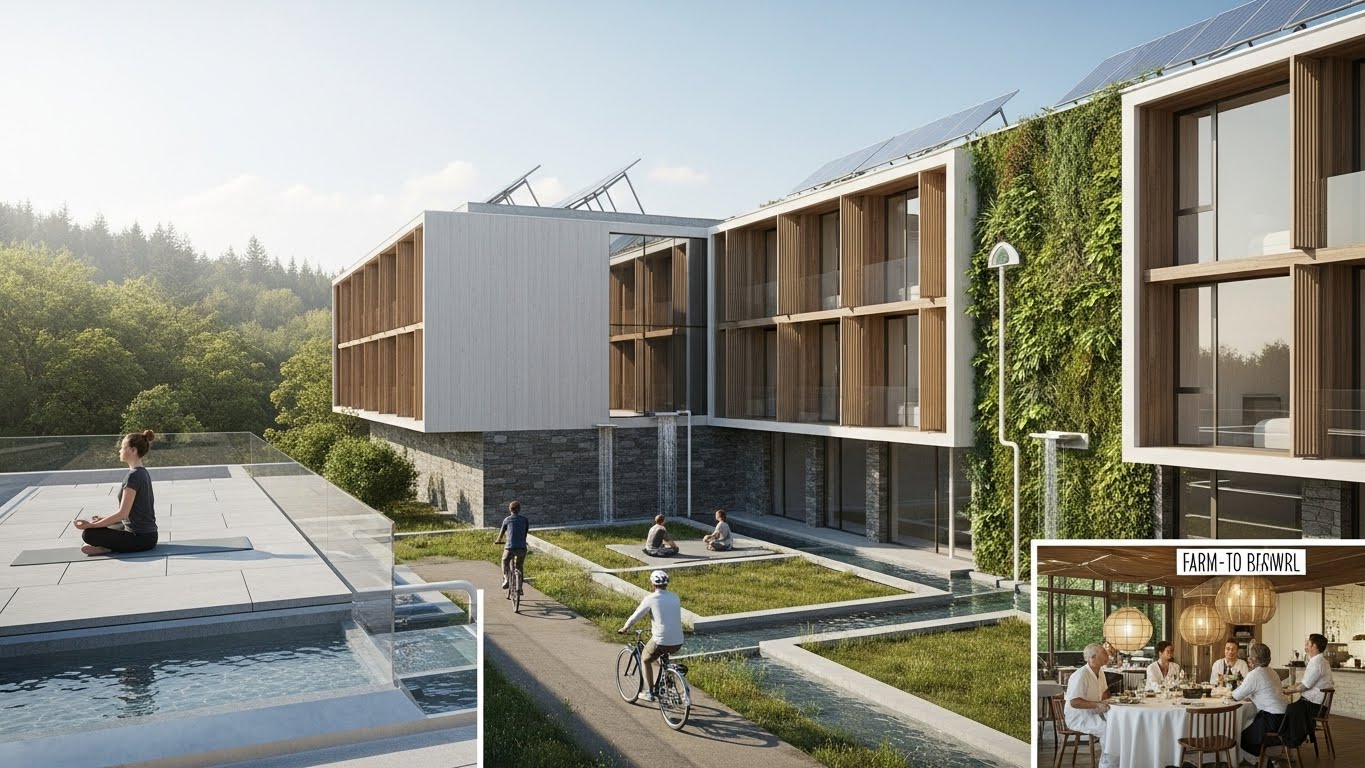
A significant shift is reshaping luxury mountain real estate. Affluent buyers increasingly arrive with environmental priorities that extend far beyond token gestures toward sustainability. These eco-focused purchasers are transforming what luxury means in mountain communities, pushing developers and builders to reimagine everything from site selection to material sourcing. Their influence is creating a new standard where ecological responsibility and refined living reinforce rather than compromise each other.
Beyond Green Marketing
Earlier generations of environmentally conscious home features often amounted to marketing exercises. A solar panel here, a recycling station there, and properties could claim green credentials without fundamental commitment. Today’s eco-focused luxury buyers see through such superficiality immediately.
These sophisticated purchasers understand building science, energy systems, and environmental impact at granular levels. They ask detailed questions about insulation values, mechanical system efficiency, and embodied carbon in construction materials. They request documentation rather than accepting verbal assurances. Builders who cannot demonstrate genuine environmental performance lose these buyers to competitors who can.
Demand Driving Innovation
This informed buyer pool has catalyzed remarkable innovation in mountain construction. Passive house principles, once considered impractical for mountain climates, now appear in luxury residences that maintain comfortable temperatures with minimal mechanical intervention. Ground-source heat pumps extract warmth from the earth itself. Battery storage systems paired with solar arrays provide energy independence during grid disruptions.
The Utah luxury real estate market exemplifies this evolution, where high-end developments increasingly compete on sustainability metrics alongside traditional luxury amenities. Buyers comparing properties evaluate energy performance certificates as carefully as they assess kitchen finishes or primary suite dimensions.
Land Stewardship as Luxury Amenity
Eco-focused buyers extend their environmental concerns beyond individual structures to entire landscapes. They seek communities with meaningful conservation commitments, permanent open space protections, and wildlife corridor preservation. A pristine natural setting isn’t merely aesthetic preference—it’s ethical requirement.
This perspective has elevated land stewardship to luxury amenity status. Developments that protect significant acreage from future construction, maintain native vegetation, and limit light pollution attract premium prices. Buyers willingly pay more knowing their purchase supports rather than degrades the mountain environments they treasure.
Material Transparency and Healthy Homes
Indoor environmental quality has become paramount for health-conscious luxury buyers. They scrutinize material selections for volatile organic compounds, formaldehyde content, and off-gassing potential. They specify low-toxicity finishes, natural fiber insulation, and ventilation systems that ensure continuous fresh air supply.
This attention extends to material sourcing ethics. Buyers want assurance that timber comes from responsibly managed forests, that stone extraction didn’t devastate distant landscapes, and that supply chains treated workers fairly. Luxury, in this framework, includes knowing that beautiful homes didn’t require environmental or human exploitation.
Resilience as Investment Protection
Climate awareness also manifests as concern for property resilience. Eco-focused buyers evaluate wildfire risk mitigation, water security, and structural durability against extreme weather events. They recognize that environmental responsibility and investment protection align—homes built to minimize ecological impact often prove most resilient against climate-related challenges.
This long-term thinking influences everything from site selection to landscaping choices. Defensible space, fire-resistant materials, and drought-tolerant plantings aren’t compromises but features that enhance both safety and environmental performance.
Reshaping Industry Standards
A report showing that sustainable travel expectations now influence purchasing behavior offers insight into why mountain luxury markets continue adjusting. You might find that buyers want options that preserve the scenic qualities they came to enjoy. You also see that there are broader cultural shifts pushing both travelers and homeowners toward more eco-minded choices.
A study identifying widespread demand for sustainable travel helps explain why mountain developers emphasize resource-smart design. You may feel that this approach appeals to buyers who care about environmental responsibility. You also see that there are steady signals that this trend will remain important for years to come.
The cumulative effect of eco-focused buyer preferences is reshaping industry standards. Practices once considered premium upgrades are becoming baseline expectations. Builders who resist this evolution find themselves competing for a shrinking pool of buyers indifferent to environmental performance.
Forward-thinking developers recognize this trajectory and position themselves accordingly. They invest in sustainable building expertise, establish relationships with environmentally responsible suppliers, and document their practices transparently. They understand that today’s eco-focused luxury buyers are leading indicators of where the broader market will follow.
The mountain luxury buyer of tomorrow will likely consider robust environmental performance as non-negotiable as quality construction or desirable location. Those who recognize this shift today are building the properties that will define mountain luxury for generations to come.











Neel Somani Discusses the Energy Market Design and How Pricing Actually Works

Eco-Friendly Landscaping: How Homeowners go Green Outdoors

Do You Need Solar Panels for Whole Home Battery Backup?

Collisions Involving Sudden Door Openings from Parallel-Parked Cars

Eco-Friendly Workplaces and Storm Attendance Challenges

How Educational Administration Degrees Support Greener Schools

How Proactive Crisis Planning Supports Safer and More Sustainable Operations

Safeguarding What Cannot Be Replaced: Managing Irreplaceable Assets In Agriculture

Quality Control As A Sustainability Lever In Manufacturing

How Paperless Payroll Helps Cut Business Carbon Emissions
How Educational Administration Degrees Support Greener Schools
Do You Need Solar Panels for Whole Home Battery Backup?
Collisions Involving Sudden Door Openings from Parallel-Parked Cars
Eco-Friendly Workplaces and Storm Attendance Challenges
Eco-Friendly Landscaping: How Homeowners go Green Outdoors
Neel Somani Discusses the Energy Market Design and How Pricing Actually Works

 Features12 months ago
Eco-Friendly Cryptocurrencies: Sustainable Investment Choices
- Energy12 months ago
The Growing Role of Solar Panels in Ireland’s Energy Future
- Energy11 months ago
Growth of Solar Power in Dublin: A Sustainable Revolution
- Energy11 months ago
Renewable Energy Adoption Can Combat Climate Change