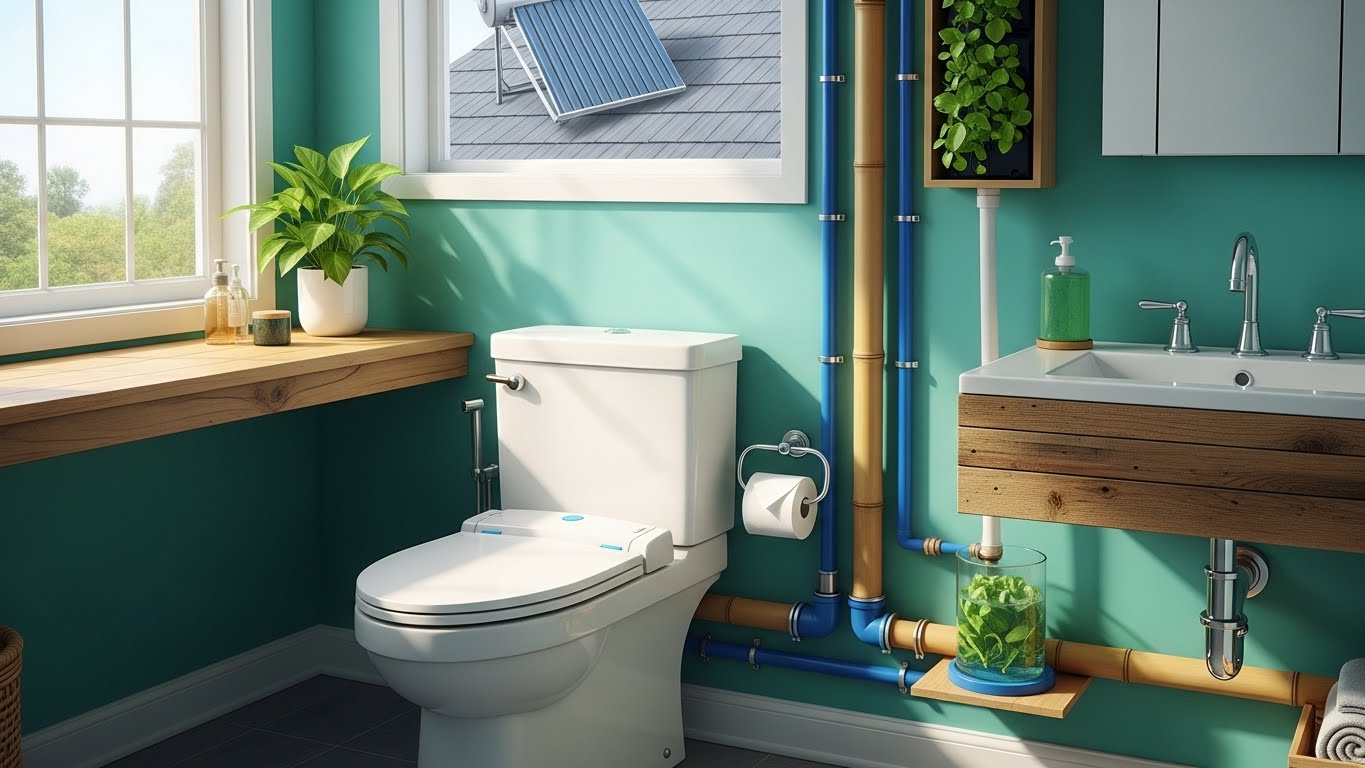


We have talked a lot about a lot of different topics since Ryan took over as the lead editor at Blue and Green Tomorrow. One of our favorite topics has been being eco-friendly homeowners. This article continues that focus by looking closely at plumbing choices and their environmental impact. It is part of an ongoing effort to help readers connect everyday home decisions with wider environmental outcomes.
You may already see sustainability mentioned in many areas of home design, yet plumbing is often overlooked despite its reach. There are many reasons this topic matters now, and the connection between water, energy, and emissions is becoming harder to ignore, so Keep reading to learn more.
How Sustainable Plumbing Solutions Support Environmental Goals
It is easy to think of plumbing as just pipes and fixtures, but the energy tied to heating, pumping, and treating water adds up quickly. There are estimates showing that this level of energy usage for plumbing results in about 290 million metric tons of carbon emissions each year. It is a figure that represents roughly 5% of total emissions in the United States. There are comparisons that put this amount on par with the carbon output of 60 coal-fired power plants.
You can also see that sustainability is no longer a niche concern limited to environmental groups. It is reflected in consumer attitudes across many markets. Ibtisum Nabihah Babar of the Business Standard reports that 78% of consumers feel sustainability is important.
There are practical reasons homeowners pay attention to plumbing upgrades that reduce water waste and lower energy demand. You can often reduce strain on local water systems by choosing fixtures and systems designed to limit unnecessary flow.
It is not just personal values that influence decisions around sustainable plumbing in housing markets. You may notice that financial considerations play a major role as well. A report from the National Association of Realtors reports that 47% of agents said financial incentives such as tax credits or rebates are the top drivers of demand for sustainable homes. There are also mentions of high energy costs pushing buyers to look for features that help control monthly expenses.
You might find that sustainable plumbing choices support long-term planning for both households and communities. It is easier to manage resources responsibly when systems are designed to reduce waste from the start.
There are broader environmental effects tied to these choices that extend beyond individual homes. You can connect reduced water and energy use with lower emissions and less pressure on infrastructure.
It is clear that plumbing plays a meaningful role in how homes interact with the environment over time. You can think of sustainable plumbing as one of several everyday tools homeowners have to reduce their environmental footprint.
There are long-term benefits that come from treating water and energy use as connected issues rather than separate ones. It is through consistent, informed choices that households can support a greener future without relying on drastic lifestyle changes.
Water scarcity and environmental concerns have moved from distant worries to immediate realities for communities worldwide. As households and businesses seek ways to reduce their environmental footprints, plumbing systems have emerged as surprisingly impactful areas for improvement. Sustainable plumbing solutions conserve precious water resources, reduce energy consumption, and minimize waste in ways that benefit both individual properties and the broader environment.
The Water Conservation Imperative
Fresh water represents a finite resource that demands careful stewardship. Traditional plumbing fixtures and practices waste enormous quantities of water through inefficient design and undetected leaks. Sustainable alternatives address both issues, dramatically reducing consumption without sacrificing functionality.
Low-flow fixtures have evolved significantly from early designs that frustrated users with inadequate performance. Modern low-flow toilets, showerheads, and faucets deliver satisfying experiences while using fractions of the water their conventional counterparts require. A family replacing outdated fixtures throughout their home can reduce water consumption by thousands of gallons annually.
Smart leak detection systems identify water loss that might otherwise go unnoticed for months or years. These technologies monitor usage patterns and alert homeowners to anomalies suggesting hidden leaks. Addressing leaks promptly prevents water waste while avoiding the property damage that undetected moisture causes.
Greywater recycling systems capture water from showers, sinks, and laundry for reuse in irrigation and toilet flushing. What once flowed directly to sewers now serves secondary purposes before leaving the property. These systems can reduce overall household water demand by thirty percent or more.
Energy Efficiency Through Plumbing
Water and energy consumption intertwine more closely than many people realize. Heating water accounts for a significant portion of residential energy use. Sustainable plumbing solutions reduce this demand through multiple approaches.
Tankless water heaters eliminate the energy waste inherent in maintaining large volumes of hot water around the clock. By heating water on demand, these systems use energy only when hot water is actually needed. The savings accumulate substantially over years of operation.
Hot water recirculation systems reduce the water wasted while waiting for hot water to reach distant fixtures. Rather than running gallons down the drain, these systems keep hot water available near points of use. The water and energy savings compound with every use throughout the day.
Proper pipe insulation prevents heat loss as water travels from heaters to fixtures. This simple measure reduces the energy required to deliver water at desired temperatures while also shortening wait times for hot water to arrive.
Professional Implementation Matters
Sustainable plumbing technologies deliver their promised benefits only when properly selected and installed. Matching solutions to specific property conditions, usage patterns, and local regulations requires expertise that goes beyond general plumbing knowledge.
Experienced professionals like those at Litteken Plumbing help property owners navigate sustainable options, identifying improvements that offer the greatest impact for individual situations. Their guidance ensures that investments in green plumbing technology deliver expected returns in conservation and cost savings.
Proper installation proves equally critical. Greywater systems require careful separation from potable water supplies. Tankless heaters demand appropriate gas lines or electrical capacity. Recirculation systems need strategic placement to function effectively. Professional implementation protects both performance and safety.
Building Codes and Incentives
Many jurisdictions now require sustainable plumbing features in new construction and major renovations. Building codes increasingly mandate low-flow fixtures, efficient water heaters, and other conservation measures. Understanding these requirements helps property owners plan projects appropriately.
Financial incentives often offset the costs of sustainable plumbing upgrades. Utility companies, municipalities, and state programs offer rebates for water-efficient fixtures, smart irrigation controllers, and other qualifying improvements. These incentives can make sustainable choices economically attractive even before ongoing savings begin accumulating.
Every Drop Counts
Sustainable plumbing represents one of the most practical ways individuals and businesses can contribute to environmental protection. The water conserved, energy saved, and waste prevented through thoughtful plumbing choices multiply across millions of properties to create meaningful impact. As water resources face increasing pressure and energy costs continue rising, sustainable plumbing solutions offer paths forward that serve both environmental responsibility and economic self-interest.














Are 4-in-1 Taps Worthwhile for Eco-Friendly Homes?

Pedestrian and Bicycle Accidents in Chicago’s Crowded Urban Areas

Neel Somani Discusses the Energy Market Design and How Pricing Actually Works

Eco-Friendly Landscaping: How Homeowners go Green Outdoors

Do You Need Solar Panels for Whole Home Battery Backup?

Collisions Involving Sudden Door Openings from Parallel-Parked Cars

Eco-Friendly Workplaces and Storm Attendance Challenges

How Educational Administration Degrees Support Greener Schools

How Proactive Crisis Planning Supports Safer and More Sustainable Operations

Safeguarding What Cannot Be Replaced: Managing Irreplaceable Assets In Agriculture
How Educational Administration Degrees Support Greener Schools
Collisions Involving Sudden Door Openings from Parallel-Parked Cars
Do You Need Solar Panels for Whole Home Battery Backup?
Eco-Friendly Workplaces and Storm Attendance Challenges
Eco-Friendly Landscaping: How Homeowners go Green Outdoors
Neel Somani Discusses the Energy Market Design and How Pricing Actually Works
Pedestrian and Bicycle Accidents in Chicago’s Crowded Urban Areas
Are 4-in-1 Taps Worthwhile for Eco-Friendly Homes?

 Features12 months ago
Eco-Friendly Cryptocurrencies: Sustainable Investment Choices
- Energy11 months ago
Growth of Solar Power in Dublin: A Sustainable Revolution
- Energy11 months ago
Renewable Energy Adoption Can Combat Climate Change
- Environment11 months ago
The Sustainable use of Natural Resources: XP Upgreen by Expert Petroleum