Scottish marine life under threat, says WWF

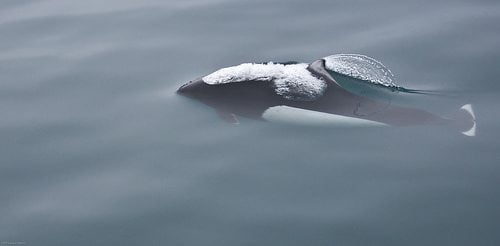
If politicians do not “step up” efforts to tackle pollution, Scotland’s marine life faces long-term damage, the WWF has said.
The warnings come just a day after four new species were discovered in the country’s waters, and coincide with the publication of a report, Marine Climate Change Impacts Report Card 2013, which summarises the research from 150 government and academic scientists over the past 12 months.
It warns that global warming could cut commercial fish catches around Scotland by 20% and drive some species of porpoises, whales and dolphins away from Scotland’s shores.
There have also been calls for oil and gas drilling to be suspended when four new sea creatures – a new kind of sea snail, two new species of clam and a marine worm – were discovered in Scottish waters.
WWF Scotland director Lang Banks said, “This is a worrying report and confirms that major changes are coming for Scotland’s marine environment, with water temperatures and acidity both rising, and important fish stocks and wildlife on the move.
“Of particular concern is the threat posed by climate change to Scotland’s fishing industry and those communities that depend upon it. It would be a great pity if all the good work being done to increase fish stocks were to be undermined by climate change.”
Banks added, “The threat posed to Scotland’s precious seas by climate change should act as a reminder to politicians of the need to step up action to cut carbon emissions”.
A report published just last month looked at the overall impact of global warming on the world’s oceans, saying that they were acidifying at “unprecedented rates”.
The authors had “high confidence” that oceans are acidifying at the fastest rate in around 300 million years, second only to a period 55 million years ago, when calcareous deep-sea organisms were subject to mass extinction. The study claims that today’s rate of acidification is 10 times the rate it was then.
Further reading:
Oceans acidifying at ‘unprecedented rates’ because of manmade CO2
‘Dark day for world’s oceans’ as talks to protect Antarctic marine life fail
Cleaning up our oceans: a journey from waste to wear
Declining health of oceans of ‘gravest concern’ to life on Earth
How we put this together

- Published
- Sources
- Primary reporting
- Standards
- About
Keep moving along the spectrum
The same desk, then neighbouring desks along the brand spectrum.





