Inventor says he can clear China’s smog using advanced vacuum

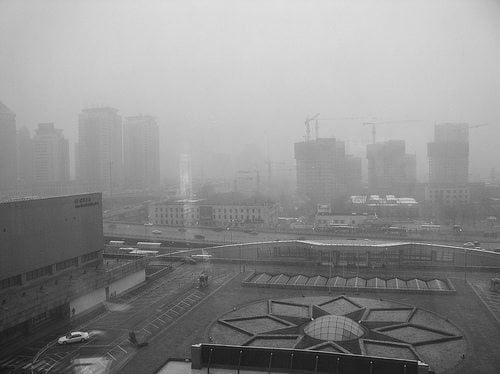
A Dutch artist has designed a system that he says could solve China’s air pollution problem, using what is essentially a giant static vacuum cleaner.
Daan Roosegaarde is best known for his digital artwork, but he believes he has devised equipment that can help solve one of China’s most pressing problems.
His invention, aptly named Smog, involves burying copper coils underground. These coils then attract airborne particles by generating an electrostatic field, “like a balloon that attracts your hair“, Roosegaarde explained.
“You can purify the air so you can breathe again”, he told Dezeen in an interview during Dutch Design Week. “It creates these holes of 50-60 metres of clean air so you can see the sun again.”
The idea has already been successfully tested in a controlled environment, and Roosegaarde’s company, Studio Roosegaarde, has agreed a deal with the mayor of Beijing to create a public park to test the technology. A promotional video shows what it might look like.
“It’s hacking the landscape, in a poetic way”, Roosegaarde said.
China’s pollution crisis has again broken records this week, as the north-eastern city of Harbin ground to a halt when a pollution index found levels of fine particulate air pollution, known as PM2.5, of around 40 times the levels said to be safe by the World Health Organisation. Schools, motorways and an airport were closed throughout the city on Tuesday.
The latest crisis came just days after separate studies linked airborne pollution to increased risk of cancer and development problems in unborn children.
A previous study published in July also found that air pollution in northern China reduces life expectancy by five-and-a-half years.
On Thursday, China’s environment ministry announced it is to send inspectors to the provinces most affected by air pollution to check that anti-pollution rules are being followed.
Further Reading:
World Health Organisation: air pollution is carcinogenic to humans
China to slow down coal consumption as part of clean air plan
Majority of Chinese cities failing to achieve sustainability, says study
‘Safe’ pollution levels can amplify lung cancer and heart failure risks
How we put this together

- Published
- Last updated
- Sources
- Primary reporting
- Standards
- About
Keep moving along the spectrum
The same desk, then neighbouring desks along the brand spectrum.





