HSBC accused of ‘bankrolling deforestation’

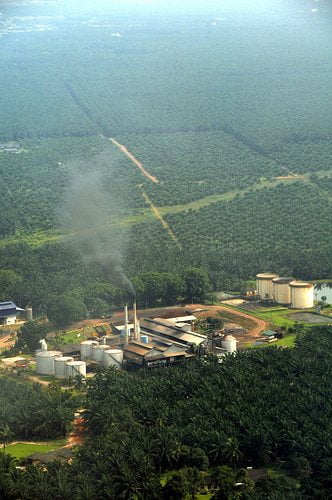
High street bank HSBC has been accused of “bankrolling the destruction of rainforests” that are essential for the survival of orangutans and other endangered species.
The Environmental Investigation Agency (EIA) has published a report, Banking on Extinction, that finds HSBC to be a leading financer of the palm oil industry, despite having polices that are supposed to stop it financing deforestation. The EIA claims the bank provides loans worth hundreds of millions of dollars to some of the palm oil industry’s worst elements.
EIA forests campaigner Jago Wadley said, “HSBC’s 60 million customers around the world would be surprised and appalled to learn that such a high-profile and trusted brand is profiting from large-scale deforestation even as it projects a wholesome public image of sustainability.”
HSBC’s forest land and forest products sector policy launched in 2004. The policy intends to govern the banks investment in several commodities either produced from forests or by forest conversion, including pulp and paper, timber, rubber and palm oil.
HSBC uses the Roundtable on Sustainable Palm Oil (RSPO) as an indicator of third-party compliance with its policies. This reliance on the organisation is “fundamentally misguided”, the EIA said. It added, that RSPO lacked credible mechanisms to ensure compliance because the system relies almost entirely on self-reporting.
Wadley added, “In effect, HSBC is delegating responsibility for its ethics to a broken system.”
A HSBC spokesperson told Blue & Green Tomorrow, “We were one of the first banks to introduce a forestry policy, which states that we will not finance the conversion of high conservation value (HCV) forest for plantations and, in the case of palm oil, have a preference for clients who seek certification under the RSPO certification scheme.”
The bank added that where clients cannot show progress towards meeting sustainability policies, it stops providing banking services
EIA case studies show that a syndicate of banks led by HSBC loaned $470m (£292) to Indonesian firm Triputra Agro. More than half of the loan would be used to finance a massive programme of land expansion. The company’s expansion programme will place it among the largest palm oil companies in Indonesia.
A second case study documents how RSPO member Bumitama Agri Ltd forged ahead with rainforest clearance even though it didn’t have the required HCV assessment. HSBC completed a $135m (£83) syndicated term loan facility to finance the company’s plantation expansion.
The report also states that HSBC’s policy “falls far short of the principles a responsible or ‘sustainable’ bank should uphold”.
Further reading:
Investigation shows inconsistency among ‘sustainable’ palm oil firms
APP making progress to end deforestation in supply chain, says Greenpeace
Skincare companies under scrutiny over palm oil use
Sir David Attenborough launches crowdfunding campaign to save mountain gorillas
How we put this together

- Published
- Sources
- Primary reporting
- Standards
- About
Keep moving along the spectrum
The same desk, then neighbouring desks along the brand spectrum.