
Blue and Green Tomorrow is committed to helping eco-conscious readers find careers that match both their values and their need for meaningful work. It is possible to build a future in healthcare while supporting cleaner operations, less waste, and better resource choices.
Healthcare Without Harm reports that 7 in 10 health care facilities are successfully reducing their climate impact. Something that makes this encouraging is that people who care about the planet can find healthcare employers that are already working to lower waste, cut emissions, and make better purchasing choices. Keep reading to learn more.
Eco-Conscious People Can Build Purposeful Careers in Healthcare
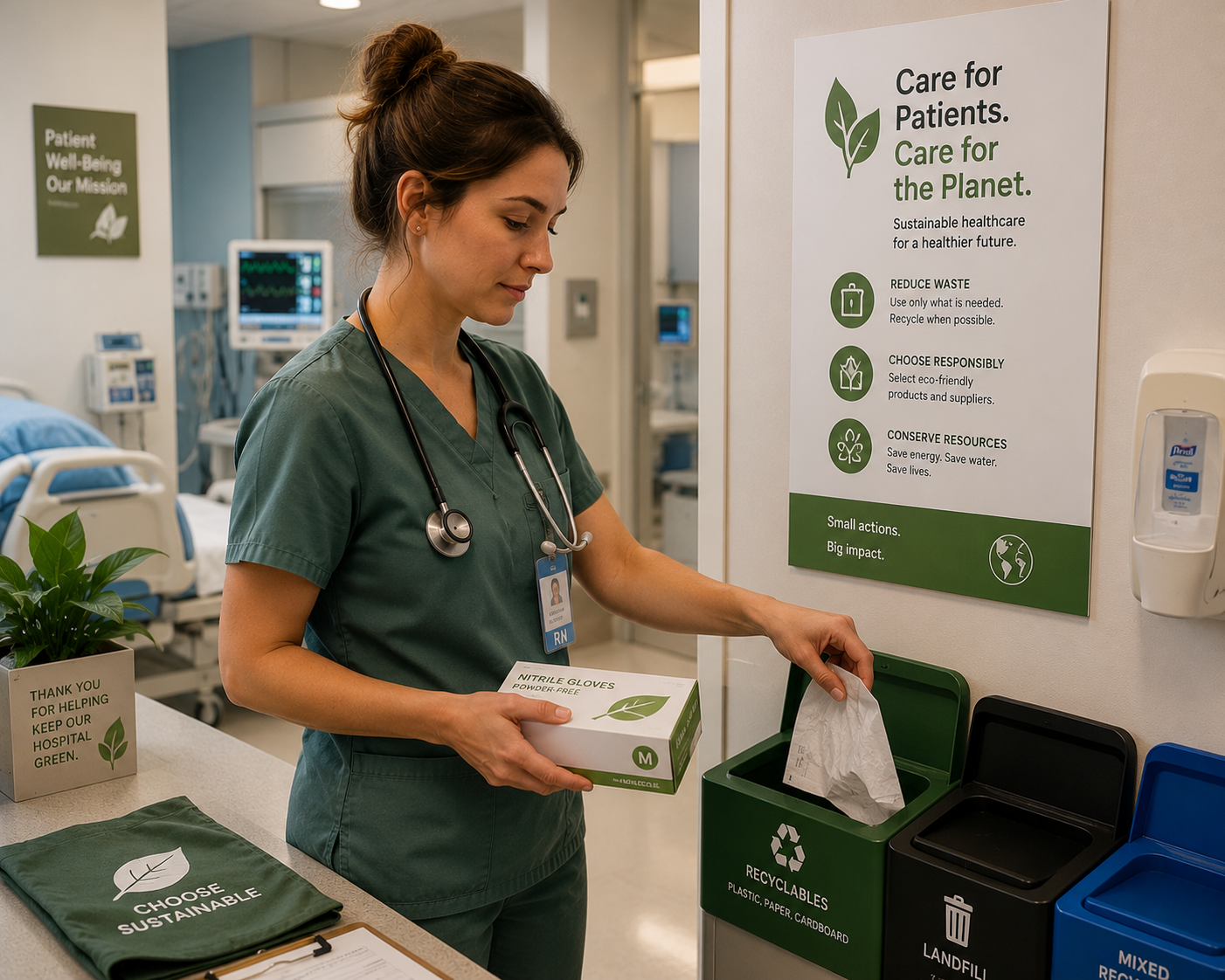
Healthcare careers do not have to be disconnected from environmental values. There are many roles where workers can help patients while also supporting greener supply chains, waste reduction, safer materials, and smarter energy use. Another thing to consider is that hospitals, clinics, labs, and long-term care facilities all need people who can spot waste and help improve daily operations.
“The nurses in the pediatric ICU at Lucile Packard Children’s Hospital at Stanford, California, discovered there was considerable supply waste from carts in patient rooms that needed to be completely emptied and discarded following the discharge of an isolation patient. They studied the cart contents for approximately eight months and found that many of the supplies were rarely, if ever, used. They developed a revised supply cart inventory and piloted it for six months. Through a cross-functional workshop, the group also developed a procedure to safely disinfect or donate all of the leftover supplies from each cart. These changes have resulted in an anticipated $1.03 million in savings each year and a reduction in landfill waste of over 15,000 pounds, just from this one hospital unit. They are evaluating other areas of the facility where this change could be made,” the authors of the website say.
People who care about the environment may find strong career paths in nursing, healthcare administration, public health, facilities management, procurement, and environmental services. It is also possible to work in roles that focus on safer chemicals, medical supply choices, recycling programs, or climate planning for health systems.
A study, The Environmental Awareness of Nurses as Environmentally Sustainable Health Care Leaders: A Mixed Method Analysis by Olga María Luque-Alcaraz of the Neurosurgery Department, Hospital Universitario Reina Sofía, Andalusian Health Care System in Cordoba, Spain and colleagues, reports that 70.4% of nurses reported environmental awareness. Another thing this shows is that healthcare workers are not only caring for patients but also thinking about the broader conditions that affect public health.
“This study revealed that most nurses have adequate knowledge, attitudes, and behaviors related to environmental sustainability both inside and outside the workplace. Limitations were associated with their knowledge and behaviors outside of work. This study also highlighted the barriers and difficulties that nurses face in their attempts to engage in adequate environmental behaviors in the workplace. Based on these findings, interventions led by nurses and the Green Team should be developed to promote sustainable behaviors among nurses and address the barriers and limitations identified in this research,” the authors of the study say.
Eco-conscious healthcare workers can also help organizations make progress from inside the system. There are many practical ways to contribute, such as reducing single-use supply waste, improving purchasing habits, supporting telehealth when appropriate, and helping teams follow greener procedures. Something that makes this work meaningful is that even small changes inside one unit can lead to major savings and less landfill waste. Healthcare workers who speak up about these issues can help their employers protect both patients and the planet.
Green healthcare careers are not limited to doctors and nurses. It is possible to work in data, compliance, operations, nutrition, building maintenance, community health, or sustainability-focused project roles. Another thing job seekers can do is look for employers with green teams, climate commitments, waste reduction programs, or public sustainability reports.
Unfortunately, experiencing burnout from unforgiving hours is a part of being a nurse. That shouldn’t be the case, but the increasing demand for nurses due to nationwide shortages has made it so. Luckily, you can work in healthcare and help countless people without working as a nurse.
That’s especially true if you pick a specialization, like physical or occupational therapy, that you’re passionate about. Today, the sky is the limit due to clinical placement services and widespread awareness of healthcare’s versatility. Follow along as we highlight several healthcare careers that don’t take the same toll as nursing.
1. Health Psychologist
Most people solely relate psychology to mental health, but health psychology emphasizes how mental and physical health are linked. Like nurses and doctors, health psychologists work in clinical settings, but they don’t endure the same physical and emotional toll. They exhibit a strong understanding of physical, biological, and mental health, drawing connections among them.
Health psychologists help their patients implement lifestyle changes that will ultimately improve their longevity. They treat people for everything from debilitating anxiety and addiction to chronic pain and disease. More importantly, health psychologists help people understand their conditions and how their behaviors affect them.
This health-focused approach to psychology can make a huge difference in someone’s life. Health psychology careers are equally rewarding and exciting, given recent technological advancements.
2. Occupational Therapist
It’s hard to understand how your motor skills and basic functions affect your daily life until you struggle with them. Some people lose these skills through age and injuries, whereas others never realize they lack them. Occupational therapists work hard to help their patients regain skills, build new ones, and manage their struggles with basic daily tasks.
This career isn’t nearly as stressful and fast-paced as working as a nurse. That’s because occupational therapists typically have a lighter patient load, which helps them have longer, more meaningful interactions. They assess their patients and develop treatment plans and exercises best suited to help them.
In many cases, occupational therapists also communicate with their patients’ family members and partners. As an occupational therapist, you can make a huge difference in someone’s life without suffering brutal hours and stressful situations.
3. Speech-Language Pathologist
Many people solely think of speech-language pathology as treatment for speech impediments, but that’s reductive when you understand what they really do. Speech-language pathologists (SLPs) focus on helping people manage speech, language, and swallowing disorders. SLPs treat patients of all ages,
Today, technology is a huge part of SLP, and there are more Augmentative and Alternative Communication (AAC) programs than ever. Telehealth platforms also help people receive SLP treatment when showing up for appointments would otherwise be difficult.
SLPs treat patients with neurodivergences, speech impediments, and cancers of the head and neck. That said, their patient pool extends far beyond that, and more people can benefit from SLP than you may realize. It’s a relatively low-stress healthcare career that is rewarding both personally and financially.
4. Physical Therapist
Nurses monitor and help treat patients for a variety of illnesses and conditions, but they only have so much time with each patient. After all, the waiting room is full, and they must prepare each patient to see the doctor. Conversely, physical therapists treat people who have typically already visited doctors and nurses and are now focused on rehabilitation.
This allows physical therapists to provide personalized care for their patients without any rush. Physical therapists develop bespoke treatment plans for each patient based on their condition and age. They often teach their patients to work through special exercises and lifestyle changes meant to address their physical limitations and injuries.
Naturally, physical therapists must have a comprehensive understanding of health and exercise. While physical therapists must work hard, it’s far less stressful than nursing.
5. Pharmacist
Nobody ever said that working as a pharmacist is easy, but it’s at least less stressful than nursing. The hustle and bustle of working as a nurse at a hospital is much more chaotic than dispensing medications at a pharmacy. However, that’s not to downplay how important and sometimes stressful working at a pharmacy can be.
For example, pharmacists must field questions all day, research drug interactions, and manage the inventory. They have deep pharmaceutical and medical knowledge, which they use to enlighten patients and keep them safe. A great pharmacist knows how to explain medication to patients without confusing or endangering them.
Interestingly, pharmacies have been slowly embracing automation and AI, but not at the expense of patients. For example, they can use AI to cross-reference drug interactions, but they must also fact-check everything. After all, pharmacies are important parts of their communities, and pharmacists care a lot about those they serve.
6. Audiologist
Most people know what nurses do, but many don’t know what audiologists do, that is, until they need them. Audiologists treat patients for hearing and balance disorders to improve their quality of life. They examine patients to test their hearing abilities and prescribe hearing aids or cochlear implants accordingly.
Audiologists have a deep understanding of hearing and how the ears affect so much of daily life. For example, someone may experience chronic dizziness without realizing that it relates to their ears. In that case, a doctor will refer a patient to an audiologist.
Audiologists, like other specialists, typically have a much smaller patient pool than primary care doctors. Through exercises and modern technology, audiologists show their patients how to thrive despite having hearing disorders. This makes audiology a rewarding career, and not enough aspiring healthcare professionals consider this route.
Not Every Healthcare Career Has to Be Stressful
Eco-conscious people do not have to choose between healthcare work and environmental responsibility. There are many ways to serve patients while helping hospitals and clinics reduce waste, use resources more carefully, and think more about their climate impact.
Healthcare can be a strong career path for people who want their work to support both human health and environmental care. Something that makes this field appealing is that the need for greener practices is already clear, which gives motivated workers room to make a real difference.
Most people pursue healthcare careers because they’re selfless and want to help others. This is quite admirable, but it doesn’t mean you must work a stressful job that leads to burnout within a few short years. Occupational therapists, physical therapists, and health psychologists help people as much as nurses, but with far less stress.
The same can be said for speech-language pathologists, pharmacists, and audiologists. These niche healthcare workers have more forgiving schedules, smaller patient pools, and more one-on-one time with patients. There’s no need to burn the candle at both ends to help others, as you have so many options for rewarding healthcare careers.













The Human Primary Cells Behind Toxicology and Chemical-Safety Research

How Sustainable Business Has Changed in the Last Five Years: An Interview with Noa Shtang

The Green Traveler’s Guide to Bali Snorkeling and Diving – Low-Impact Ways to See the Reef

Why Eco-Tourists Choose the Liveaboard in Komodo

Eating Out Abroad? ePOS Systems Are Quietly Cutting Food Waste

PMS for Hotels Explained – The Hidden Software Making Your Stay Greener

The Eco-Case for a Liveaboard – Why the Greenest Way to See a Reef Might Be a Boat

Future-Proofing the Sustainable Workplace: Integrating Solar PV and Smart EV Infrastructure

Why Outdoor Offices Are the Future of Sustainable Work

How Eco-Conscious People Can Find Careers in Healthcare
PMS for Hotels Explained – The Hidden Software Making Your Stay Greener
The Green Traveler’s Guide to Bali Snorkeling and Diving – Low-Impact Ways to See the Reef
How Sustainable Business Has Changed in the Last Five Years: An Interview with Noa Shtang
Eating Out Abroad? ePOS Systems Are Quietly Cutting Food Waste
Why Eco-Tourists Choose the Liveaboard in Komodo
The Eco-Case for a Liveaboard – Why the Greenest Way to See a Reef Might Be a Boat
The Human Primary Cells Behind Toxicology and Chemical-Safety Research

 Features10 months ago
Top Agricultural Stocks to Watch
- Environment12 months ago
Small Choices, Big Impact: Cutting Your Daily Carbon Footprint
- Sustainability10 months ago
Sustainable Travel in Christchurch: A Greener Way to Explore
- Features10 months ago
Staying Healthy on the Road: Eco-Conscious Habits for Global Travelers