34% of investors want their money to help build a sustainable economy

Share
A third of UK investors (34%) want their savings and investments to help create a more sustainable economy, according to a YouGov survey conducted for National Ethical Investment Week (NEIW).
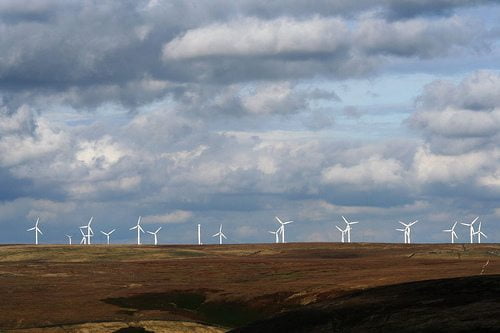
Investors said they would be particularly keen to back the transition to a low-carbon economy, with 42% saying they would be interested in investing in renewable energy sources while 40% said they would support energy efficiency companies.
Sustainable agriculture and waste and recycling projects were also popular choices, with 38% and 39% of investors expressing interest respectively.
Claudia Quiroz, investment director at Quilter Cheviot, argued that “low carbon energy, food, health, resource management and water” were the five key macro trends that sustainable investment must be built around.
“Sustainable investment is about investing in the new economy – the new economy is cleaner and more efficient”, she said.
“We need to be investing in companies that respond faster and operate with better quality principles in a carbon-constrained environment.”
The decarbonisation of the British economy has been the subject of recent debate, after MPs and climate change experts warned the government that lowering the UK’s carbon reduction targets would be unjustified and short-sighted.
Lord Deben, chair of the committee on climate change, wrote to energy and climate change secretary Ed Davey, insisting that the ‘carbon budget’ must not be changed. He also added that to delay a decision over the budget would only increase doubt over investment in low carbon technologies in the UK.
The debate followed the Intergovernmental Panel on Climate Change’s (IPCC) latest review on the science of climate change. For the first time, scientists estimated how much more carbon dioxide can be released into the environment by manmade processes before irreversible damage is done.
The IPCC said that in order to have a chance of keeping to less than a potentially catastrophic 2C of warming, the total carbon emitted globally could not exceed 1,000 gigatonnes. The report estimated that two-thirds of this budget may have already been used up.
Research has also shown that investors in carbon-intensive business could see their money burned. A study by the Carbon Tracker Initiative and the London School of Economics claimed that investors could see $6 trillion wasted in the next 10 years as policies limiting global warming stop them exploiting their coal, oil and gas reserves
The YouGov survey, commissioned by the UK Sustainable Investment and Finance Association (UKSIF) which co-ordinates NEIW, coincides with the release of figures by responsible investment research firm EIRIS, which revealed that £12.2 billion is now invested in green and ethical funds in the UK.
This represents a rise of around £1.2 billion from 2012, and is a dramatic increase from the £4 billion that was invested in such funds in 2001.
National Ethical Investment Week 2013 runs from October 13-19. Join the debate on Twitter using the hashtag #moneydoinggood.
Further reading:
63% of UK investors want to be offered sustainable investment options
70% of investors don’t know if their investments are ethical
Sign up for daily National Ethical Investment Week news
Reducing carbon budgets would be ‘incredibly short-sighted’
Don’t delay carbon budget decision, climate watchdog tells Ed Davey
How we put this together

- Published
- Sources
- Primary reporting
- Standards
- About
Keep moving along the spectrum
The same desk, then neighbouring desks along the brand spectrum.




