Rising carbon dioxide will amplify El Niño, say scientists

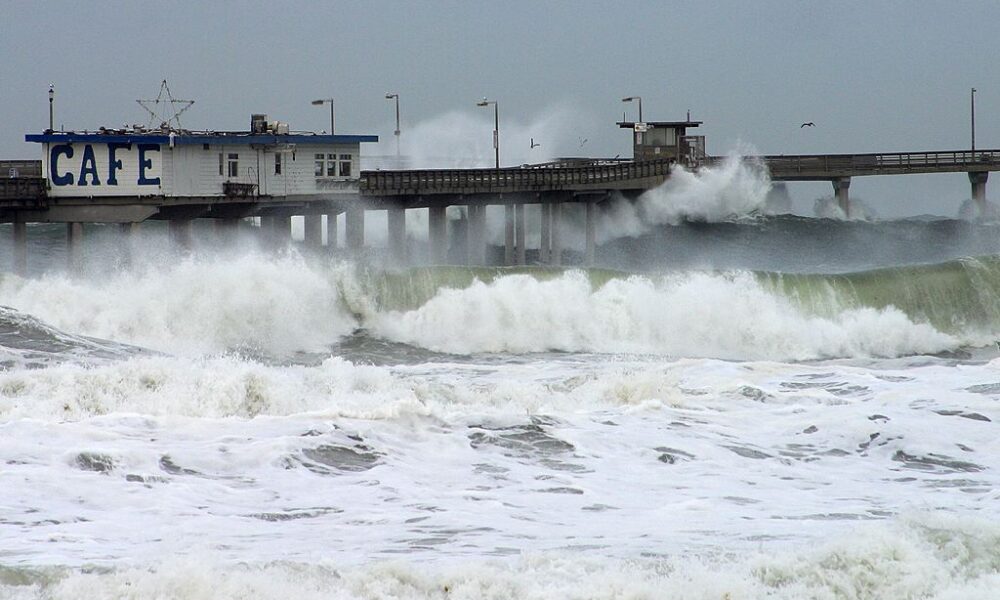
The climate variation pattern, El Niño Southern Oscillation (ENSO), will be strongly influenced by global warming in the future, a new study has found.
Scientists from the Centre for Australian Weather and Climate Research have used different carbon dioxide (CO2) and other greenhouse gas scenarios to predict whether global warming will affect the intensity of El Niño.
Their study, Robust twenty-first-century projections of El Niño and related precipitation variability which was published in Nature, argues that there are “robust projected changes in the spatial patterns of year-to-year ENSO-driven variability in both surface temperature and precipitation”, related to rising levels of CO2.
According to lead author Scott Power, global warming will interfere with El Niño-related phenomena.
“This interference causes an intensification of El Niño-driven drying in the western Pacific and rainfall increases in the central and eastern equatorial Pacific”, he said.
El Niño Southern Oscillation (ENSO) is stream of warm ocean water that periodically occurs in South America and causes climate changes such as heavy rainfall, extreme events and alteration to ecosystem in the Pacific.
So far, scientists have been unable to predict how El Niño and La Niña – the cooling equivalent – will act by the end of the century, but they acknowledge that the ENSO will continue to cause climate variability. The next wave of oscillation is expected to occur in spring 2014.
In September, a study revealed that climate change played a crucial role in half of 2012 extreme events, while the UN World Meteorological Organisation (UNWMO) called the years between 2001 to 2010 a period of “unprecedented” extremes.
Since 2010 alone, the UN estimates an economic loss of over $100 billion (£66 billion) due to natural disasters.
Further reading:
Half of 2012 extreme weather events linked to climate change, says study
UN agency reports on ‘decade of climate extremes’
1 in 10 people will live in a ‘climate change hotspot’ this century
Environment Agency: climate change means we need to adapt to extreme weather
How we put this together

- Published
- Sources
- Primary reporting
- Standards
- About
Keep moving along the spectrum
The same desk, then neighbouring desks along the brand spectrum.





