Chinese rescue plans foiled for stranded Antarctic ship

Share
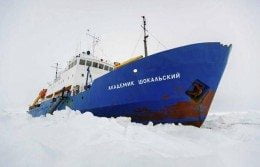
A rescue ship which is helping the stranded Russian research vessel Akademik Shokalskiy has itself become stuck, reports have claimed, setting back rescue plans further than expected.
The Chinese Xue Long – or Snow Dragon – made an attempt to rescue the Shokalskiy last week, but had to return to open waters when its captain thought it was under threat of becoming stuck itself, leading to the ship returning to open waters.
The Shokalskiy was stranded by ice, caused by blizzard winds, on Christmas Eve, although those on board are said to be in no danger and have plenty of supplies.
On Monday, plans by the Australian icebreaker Australasia Aurosis to rescue the stranded vessel were thwarted with the onslaught of strong blizzards.
The initial idea was that if the Aurosis could not reach the vessel, an air evacuation would be co-ordinated from the Xue Long, but after reports that this ship has itself become stranded, the likelihood of such an evacuation is minimal.
This is the second time this year that research scientists have run into troubles over extreme weather conditions in the poles. Back in May, Russian scientists were forced to abandon their research station after extreme ice melting.
But this winter, a satellite detected 50% more ice in the Arctic region on the same period last year, although the amount of ice in the region is now 9,000 sq km. This figure was 30,000 sq km in 1980.
Further reading:
Blizzards thwart latest rescue efforts for stranded Antarctic ship
Stranded Antarctic ship could face air evacuation
Scientists left ‘twiddling fingers’ on stranded Antarctic ship
Antarctica home to ‘coldest ever’ spot on Earth
‘Dark day for world’s oceans’ as talks to protect Antarctic marine life fail
How we put this together

- Published
- Sources
- Primary reporting
- Standards
- About
Keep moving along the spectrum
The same desk, then neighbouring desks along the brand spectrum.





