Delaying climate action will ‘lock in’ carbon intensive tech, UN says

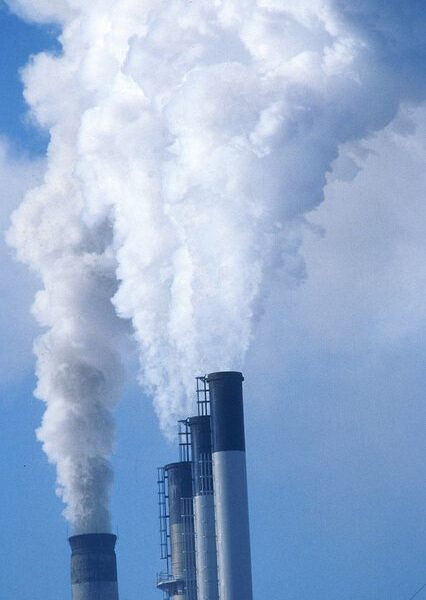
A new report by the UN Environment Programme (UNEP) has reaffirmed the urgency to reduce greenhouse gas emissions by 2020 if we want to avoid runaway climate change.
The Emissions Gap Report 2013 suggests that not tackling emissions by 2020 will result in amplified challenges, such as a greater reliance on unproven technologies and carbon intensive infrastructure, as well as higher costs of mitigation measures.
UNEP director Achim Steiner said, “As the report highlights, delayed actions means a higher rate of climate change in the near-term and likely more near-term climate impacts, as well as the continued use of carbon intensive and energy intensive infrastructure.
“This ‘lock-in’ would slow down the introduction of climate-friendly technologies and narrow the developmental choices that would place the global community on the path to a sustainable, green future.
“However, the stepping stone of the 2020 target can still be achieved by strengthening current pledges and by further action, including scaling up international cooperation initiatives in areas such as energy efficiency, fossil fuel subsidy reform and renewable energy.”
The report – prepared ahead of climate change talks in Warsaw, Poland – says that emissions should be kept at a maximum of 44 gigatonnes of equivalent carbon dioxide (GtCO2e) by 2020 and progressively declined over the following years. In 2010, this stood at 50.1GtCO2e.
Leader of the WWF’s global climate and energy initiative Samantha Smith commented on the report, saying, “Putting off action until later will not only be more expensive, it may not work. Waiting for a new global deal to kick in after 2020 is not an option.
“At the next round of climate negotiations in Warsaw, governments have to commit to immediate action on a just transition out of fossil fuels and into renewable energy, as well as the long-term targets we need for a global climate deal.”
Further reading:
World on track to use up entire 21st century carbon budget by 2034
IPCC climate report: global temperatures likely to exceed 2C this century
Climate change threatens 31% of global economic output
Governments must see ‘scientific realities of inaction’ on climate change, says IPCC chief
How we put this together

- Published
- Sources
- Primary reporting
- Standards
- About
Keep moving along the spectrum
The same desk, then neighbouring desks along the brand spectrum.





