UK retail chains must lift sweatshop workers out of poverty, says union leader
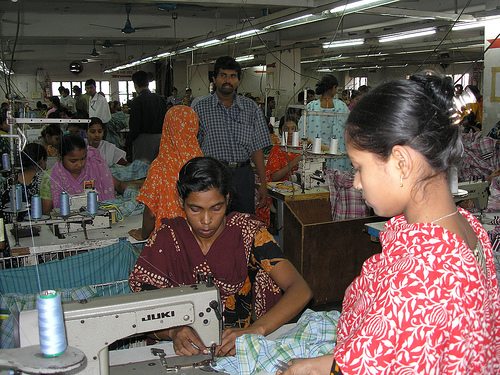
A Bangladeshi union leader has arrived in London ahead of the city’s fashion week to demand a living wage for the workers of factories like the Rana Plaza, which collapsed back in April.
Amirul Haque Amin, president of the National Garment Workers’ Federation (NGWF), touched down in London on Friday, and is expected to join forces with campaigners battling to win a living wage for workers of British universities and colleges.
Ahead of his arrival, the campaign group War on Want (WoW) released a report which suggests that a living wage could bring benefits for both suppliers and buyers alike, while drastically improving the quality of life of sweatshop workers.
In April, the collapse of the Rana Plaza, an eight-story building in Bangladesh containing clothing factories, a bank, apartments and several shops, cost the lives of 1129 people, and injured around 2500. The disaster inspired long-term campaigns throughout the supply chain industry demanding changes in working conditions.
Amin said, “The Rana Plaza disaster did not only expose unsafe working conditions for workers turning out British stores’ clothes, but the pittance on which they struggle to live.
“It is high time UK retail chains, and other companies sourcing from Bangladesh, matched ethical claims to lift their suppliers’ workers out of poverty.”
Membership organisation, Sedex, which aims to reduce risk within the multi-tiered supply chain believes that, by collaborating together, suppliers and buyers can create a stable industry where everyone involved can reap the rewards of that stability.
Sedex recently launched a film series investigating how companies can work together to create a more sustainable supply chain.
Further reading:
Talks ‘ongoing’ with Topshop boss Sir Philip Green over Bangladesh safety pledge
Sedex launches film series in a bid to improve responsible sourcing
UK to help improve working conditions in Bangladesh
Is a passion for fashion compatible with a concern for the world around us?
How we put this together
Blue & Green Tomorrow's editorial desk reports on ethical investment, clean energy, and sustainable living.
- Published
- Sources
- Primary reporting
- Standards
- Corrections policy · About · Report an error
Keep moving along the spectrum
The same desk, then neighbouring desks along the brand spectrum.





